Key Highlights
- The construction cost for an auto dealership in Houston varies significantly by type, from $200-$400 per square foot for new showrooms to $120-$250 for used car facilities.
- Service centers and repair bays typically cost between $150 and $280 per square foot.
- Houston’s specific factors, like hurricane-resistant codes and challenging clay soils, influence the total project cost.
- OEM brand standards for manufacturers like Toyota or Ford dictate design, finishes, and layout, impacting budgets.
- Major expenses for a commercial building include showroom glass, service bay equipment, and EV-ready infrastructure.
- Land costs in prime Houston dealership corridors add a significant expense to the overall car dealership construction budget.
Introduction
Planning to build or renovate a car dealership in Houston? Understanding the associated construction cost is the first step toward a successful project. Houston’s dynamic market presents unique opportunities and challenges, from specific building codes to manufacturer brand requirements. This guide breaks down the costs of building everything from a state-of-the-art showroom to an efficient service center. Whether you’re an independent owner or a large auto group, knowing these numbers will help you budget effectively and make informed decisions for your next commercial construction project.
Understanding Auto Dealership Construction Costs in Houston, TX
Grasping the financial scope of building an automotive dealership in Houston is crucial for your investment. The total construction cost isn’t a single number; it’s a range influenced by the type of facility, its size, and the level of finishes. A high-end luxury brand showroom will have a much different price tag than a practical used car dealership lot.
From new construction to renovations, every project has a unique cost per square foot. These figures are shaped by everything from the complexity of the commercial construction to the specific features you include. Let’s examine the typical cost ranges for different dealership types and see how Houston’s market compares on a larger scale.
Typical Cost Ranges by Dealership Type: New, Used, and Service Centers
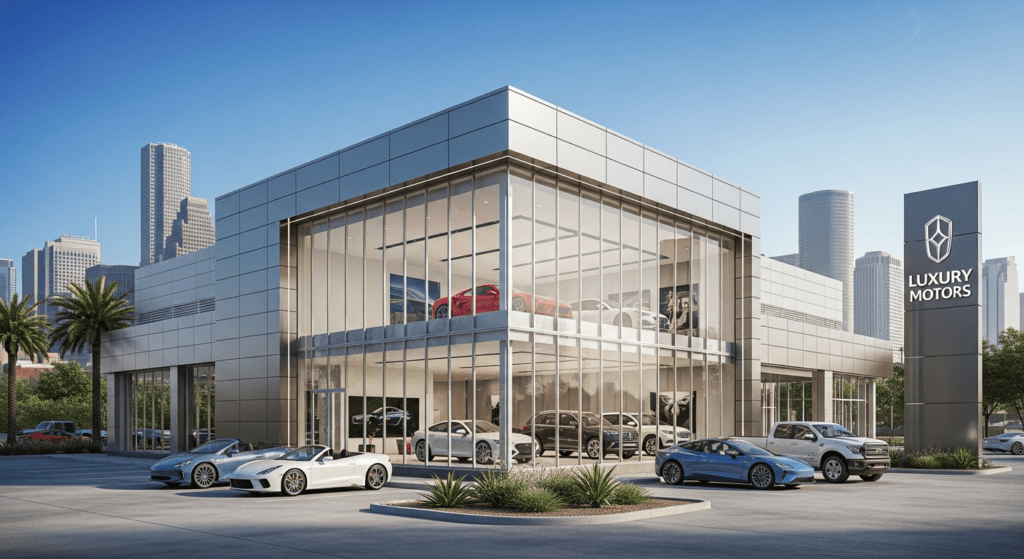
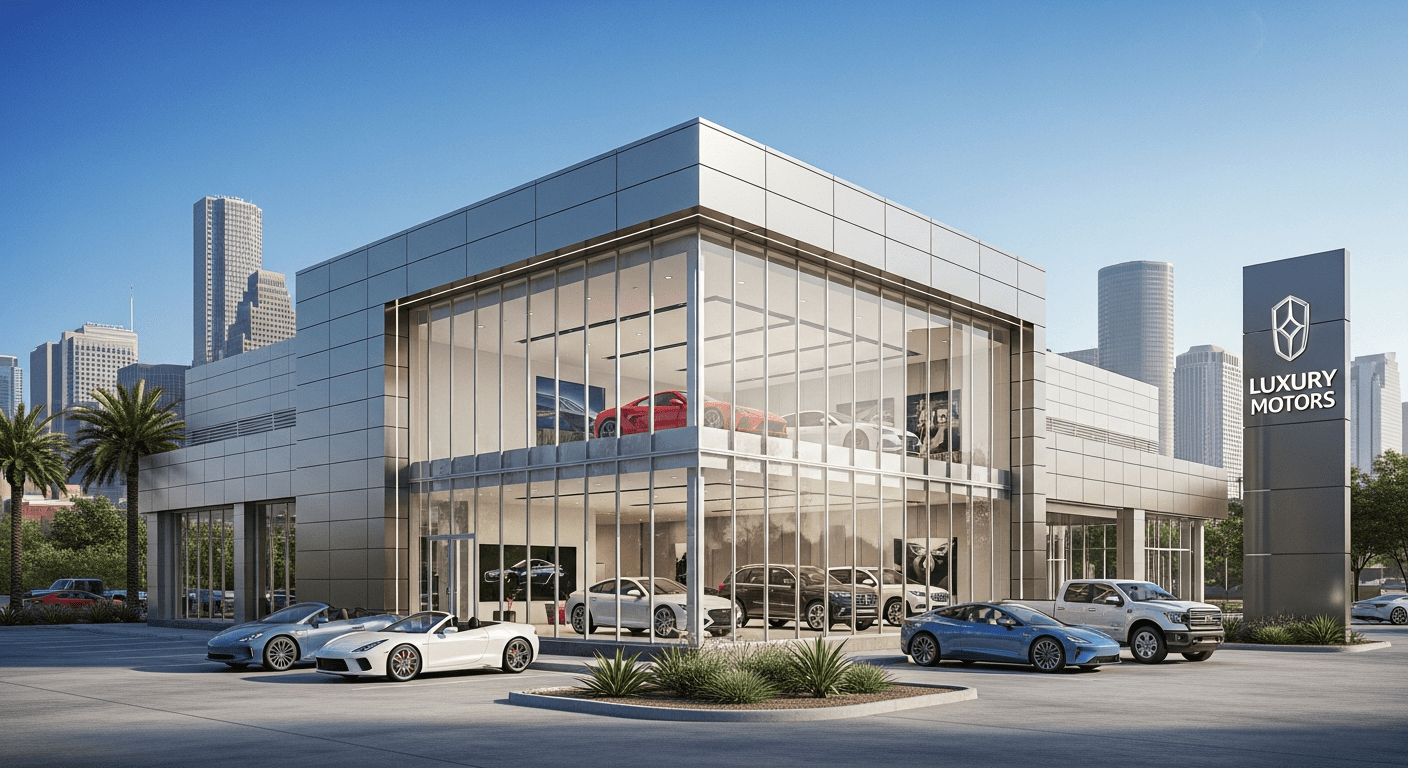
The construction cost for your dealership largely depends on its primary function. A brand-new dealership an OEM requires has the highest investment due to strict brand standards and premium customer-facing areas. The average cost to build a new auto dealership in Houston, TX, for a new car showroom typically falls between $200 and $400 per square foot.
A used car dealership facility offers more flexibility and, therefore, a lower price point. These builds usually range from $120 to $250 per square foot. This price difference reflects less stringent design requirements and more practical finish choices compared to a new dealership.
Service centers and their associated repair bays are a critical component of dealership profitability. The construction cost for these specialized areas, which require heavy-duty infrastructure, ranges from $150 to $280 per square foot. Quick lube or express service facilities, which are smaller in scale, are slightly more affordable, costing between $130 and $220 per square foot. The final square footage and equipment complexity will determine where your project falls within these ranges.
Cost Per Square Foot Compared to National Averages
How does the price per square foot for dealership construction in Houston compare to the national average? While Texas generally falls within the southern U.S. construction cost range, Houston often lands on the higher end of that spectrum. This is due to specific local factors like stringent building codes designed for hurricane resistance and the need for specialized foundation work.
These local requirements mean that building in Houston can be more expensive than in other parts of the country with less demanding regulations. The competitive real estate market and strong demand for skilled labor also contribute to a higher overall construction cost. You should anticipate a premium when planning your budget for a Houston-based project.
Here’s a look at how Houston’s specific costs compare to general commercial construction estimates in Texas, giving you a clearer picture of the local market conditions.
| Facility Type | Houston-Specific Cost Per Square Foot | General Texas Retail Build-Out Cost Per Square Foot |
|---|---|---|
| New Car Dealership Showroom | $200 – $400 | $250 – $380 (High-End Retail Shell) |
| Used Car Dealership Facility | $120 – $250 | $130 – $320 (General Retail) |
| Dealership Renovation | $80 – $200 | $120 – $180 (White Box Interior) |
Major Factors That Influence Dealership Construction Budgets
Several key variables will shape your final construction cost. Beyond the basic structure, factors like land acquisition, fluctuating material costs, and labor availability play a significant role. In a bustling market like Houston, these elements can have a substantial impact on your total project cost.
Understanding these drivers is essential for smart budgeting. The location of your real estate, prevailing market conditions, and the cost of materials and labor are all interconnected pieces of the financial puzzle. We’ll explore how these factors specifically affect dealership construction in the Houston area.
Land, Property Value, and Location Trends in Houston
Where you decide to build is one of the most significant cost drivers. How do land and property prices for auto dealerships vary across different areas of Houston? Prime real estate along high-traffic dealership corridors commands a premium. These locations offer maximum visibility but come with higher land acquisition costs.
The value of land can fluctuate dramatically depending on the sub-market. For example, properties along major highways are highly sought after, which elevates their price. It’s important to research local market conditions to understand where you can get the most value for your investment.
Consider these key location trends in Houston:
- Major Dealership Corridors: Areas along I-45, I-10, and Highway 290 are hotspots for dealerships, leading to competitive and high property values.
- Suburban Growth: Expanding suburban communities offer opportunities for new dealerships, though land prices are rising in these areas as well.
- Land Constraints: In densely developed parts of Houston, limited land availability can drive up costs or necessitate multi-story construction.
Impact of Market Conditions and Labor Costs
Current market conditions are a major factor that influences auto dealership construction costs in Houston, TX. The price and availability of essential materials like steel and concrete can change rapidly, impacting your budget. Supply chain disruptions can also lead to long lead times for critical components, such as HVAC systems or specialized equipment.
Furthermore, Houston’s booming construction sector creates a high demand for skilled labor. This competition for experienced workers can drive up labor costs, which make up a significant portion of your total budget. A tight labor market may also extend your project timeline if qualified tradespeople are not readily available.
Key market factors to watch include:
- Material Costs: Steel, concrete, and glass prices are subject to volatility, which can affect your hard costs.
- Labor Costs: A shortage of skilled electricians, plumbers, and other trades in Texas can increase wages and overall project expenses.
- Interest Rates: Changes in interest rates can affect your financing and influence the project’s overall financial feasibility.
Design Standards and Brand Image Requirements
When building a franchised dealership, your design isn’t entirely up to you. Original Equipment Manufacturers (OEMs) have strict facility guidelines that dictate everything from the showroom layout to the type of tile used in the customer lounge. These standards are in place to ensure a consistent brand image across all their locations.
Adhering to these requirements is non-negotiable and can significantly add to your construction cost. Whether you are building from the ground up or performing renovations for brand compliance, these OEM mandates will be a central part of your project’s scope and budget. Let’s look at how to navigate these guidelines and upgrades.
Meeting OEM Manufacturer Facility Guidelines
Franchise holders must follow detailed facility programs established by their OEM, whether it’s Toyota, Ford, GM, or another major brand. These guidelines cover architectural style, interior finishes, lighting specifications, and even furniture. The goal is to create a specific customer experience that reflects the brand’s identity. These requirements often call for high-end materials and custom features, which can elevate the construction cost.
These standards extend beyond just the showroom. They often specify the layout and outfitting of service centers, customer waiting areas, and office spaces. For example, an OEM might require a certain number of service bays, specific diagnostic equipment, and a particular design for the customer lounge to enhance operational efficiency.
Furthermore, many manufacturers are now incorporating sustainability elements into their facility requirements. This could mean mandating energy-efficient HVAC systems, LED lighting, or provisions for EV charging stations. While these features promote a modern brand image, they also add another layer of complexity and cost to your commercial building project.
Navigating Brand Compliance Upgrades and Renovations
Dealerships often need to undergo periodic renovations to stay compliant with evolving OEM brand standards. These brand compliance upgrades are essential for maintaining your franchise agreement but can represent a significant capital expense. A renovation project might involve a complete facade overhaul, a redesigned showroom, or updated service facilities.
The cost for these upgrades and renovations can range from $80 to $200 per square foot, depending on the extent of the changes. A simple refresh of interior finishes will be on the lower end, while a major structural or systems overhaul will be more costly. Recent examples of auto dealership construction projects completed in Houston often involve modernizing older facilities to meet new OEM image programs.
Planning these renovations requires careful coordination to minimize disruption to your ongoing business. Phasing the construction can help keep your dealership operational while the upgrades are in progress. Working with a contractor experienced in dealership renovations is key to managing the timeline and budget effectively while ensuring every brand requirement is met.
Structural Elements and Construction Methods for Houston Dealerships
Building in Houston requires specific construction methods to address the region’s unique environmental challenges. The combination of heavy vehicle traffic and difficult soil conditions demands robust structural designs. From the foundation to the roof, every element must be engineered to withstand local conditions, which impacts the overall cost per square foot.
The choice of materials and construction techniques for your commercial building will directly influence both the durability and the budget of your project. Let’s examine the critical structural components, like foundations and showroom walls, and how they are adapted for the Houston market.
Foundations and Flooring for Heavy Vehicle Traffic on Houston Clay Soils
One of the first challenges in any Houston construction project is the soil. The area is known for its expansive clay soils, which can shift and settle, posing a risk to building foundations. For a car dealership that supports the weight of heavy vehicle traffic, a properly engineered foundation is non-negotiable. This often involves more extensive site work and deeper, reinforced foundations than might be required in areas with better soil conditions.
These poor soil conditions necessitate specialized foundation designs, such as slab-on-grade foundations with significant reinforcement or pier-and-beam systems, to ensure long-term stability. The flooring in showrooms and, more importantly, in service bays must be exceptionally durable. Reinforced concrete is the standard, designed to handle the constant movement of vehicles and the weight of heavy equipment like vehicle lifts.
The typical construction methods used for car dealerships in Houston are chosen for strength and longevity. The additional engineering and materials required to address the clay soil will add to the initial construction cost, but they are a critical investment to prevent future structural issues. The cost per square foot for this foundational work is a key part of your budget.
Showroom Glass Curtain Walls, Hurricane-Resistant Glazing, and Specialty Features
Modern dealership showrooms are defined by their expansive glass curtain walls, which create a bright, open, and inviting space for customers. In Houston, these impressive glass systems must also meet stringent building codes for hurricane resistance. This requires specialized, impact-rated glazing and reinforced framing systems, which come at a premium. The cost for these hurricane-resistant glass curtain wall systems typically ranges from $60 to $120 per square foot.
Beyond the glass, other specialty features contribute to a dealership’s functionality and aesthetic appeal. These elements are part of the major expenses involved in building a car dealership in Houston and need to be factored into your budget carefully.
Key specialty features include:
- Vehicle Display Lighting: Advanced lighting systems designed to showcase vehicles in the best possible light.
- Architectural Metal Panels: Often used on the exterior to meet OEM brand image requirements.
- Automatic Sliding Doors: High-traffic entryways that enhance customer convenience and accessibility.
Each of these features adds to the project’s complexity and cost, but they are essential for creating a modern and compliant automotive dealership in a competitive market like Houston, Texas.
Key Components and Feature Cost Breakdown
A dealership is more than just a building; it’s a complex facility with many specialized components. Understanding the cost breakdown of these key features is essential for accurate budgeting. From the service bays where technicians work to the customer lounge where buyers wait, each area has its own associated costs.
Breaking down the major expenses involved in building a car dealership in Houston helps you see where your money is going. This includes not only the structure itself but also the essential equipment and site work. We will explore the costs associated with service infrastructure, customer-facing amenities, and other critical dealership features.
Service Bays, Repair Shops, Quick Lube, and EV-Ready Infrastructure
The service department is the heart of a dealership’s long-term profitability, and its construction costs reflect its importance. Building out service bays and repair shops involves more than just walls and a roof. Each bay needs specialized infrastructure, including vehicle lifts, compressed air lines, and fluid distribution systems. The construction of a single service bay, including the lift, can cost between $40,000 and $80,000.
For dealerships with body shops, the installation of a paint booth is a major expense, ranging from $150,000 to $400,000. Additionally, parts departments often require multi-level mezzanine storage to maximize space, which can cost $100 to $180 per square foot.
As the industry shifts, preparing for electric vehicles is now a critical consideration. This includes:
- EV Charging Stations: Installing multiple chargers for service and customer use.
- Electrical Upgrades: Significant electrical system enhancements to support the high power demands of fast chargers, costing between $50,000 and $200,000.
- Specialized EV Service Bays: Bays equipped with the necessary tools and safety equipment to service electric vehicles.
Customer Lounge, Vehicle Display Lighting, Signage, Car Wash, and Paving Costs
Creating a positive customer experience is paramount, and the costs of customer-facing amenities reflect this. The customer lounge and waiting area require high-quality finishes, comfortable furniture, and amenities like coffee bars and Wi-Fi, which can significantly drive up the cost per square foot. Vehicle display lighting is another crucial investment, using specialized fixtures to highlight the cars on the showroom floor.
A dealership’s exterior features are just as important for attracting customers. Large, illuminated brand signage is a major budget item, with costs ranging from $50,000 to $300,000 depending on size and complexity. An on-site car wash facility is another common feature that adds significant value but also comes with a hefty price tag of $200,000 to $500,000.
Finally, the vehicle lot itself requires substantial investment. A major expense involved in building a car dealership in Houston is the cost of paving and drainage, which is critical in a flood-prone area.
- Lot Paving: Asphalt or concrete paving with proper drainage systems can cost between $8 and $15 per square foot.
- Exterior Lighting: Bright, efficient lighting for the lot is essential for security and nighttime visibility.
- Landscaping and Bollards: These elements enhance curb appeal and provide vehicle protection.
Conclusion
In conclusion, understanding the costs associated with auto dealership construction in Houston is vital for effective budgeting and planning. With various factors at play—from the type of dealership to compliance with OEM standards—having a clear grasp on these specifics can help streamline the process and avoid unforeseen expenses. Whether you are contemplating building a new showroom or renovating an existing facility, being informed about construction costs and local regulations ensures that you can make strategic decisions that align with your goals. For a more tailored approach to your dealership project, consider reaching out for a consultation to explore how RJT Construction LLC can assist you in navigating this complex landscape.
Frequently Asked Questions
What are the main local Houston permits and regulations that affect auto dealership construction?
The main local regulations affecting dealership construction cost in Houston include Harris County commercial permitting, stringent windstorm and flood-resistant building codes, and foundation design requirements for the area’s clay soils. These rules add complexity and expense to ensure the dealership is safe and durable.
How much capital is needed to open a small used car dealership in Houston?
The upfront costs for a small used car dealership in Houston can vary greatly, but you should budget for facilities, licensing, insurance, and initial vehicle inventory. While facility costs are lower than for a new dealership, the total capital needed can still range from several hundred thousand to over a million dollars.
Are turnkey dealership properties more cost-effective than building new in Houston?
A turnkey dealership can be more cost-effective if it meets your brand’s requirements and is in a good location, as it avoids the lengthy process of building new. However, if significant renovations are needed to achieve brand compliance, building a new facility might offer better long-term value in Houston.