Commercial Flat Roof Replacement Cost in Houston: What Drives the Price

Property owners and facility managers often struggle to find a fixed number when budgeting for a new roof. Every roofer provides a range that shifts based on the specific building, making it difficult to pin down a reliable commercial flat roof replacement cost without a site walk. This guide explains what actually moves the number instead of relying on guesses. We cover cost drivers, roofing systems, Houston climate effects, size and complexity, drainage and code, the choice between repair and replacement, and how to vet and compare bids on equal terms. This information is intended for commercial property owners, facility and property managers, developers, and public-sector buyers in Houston and across Texas.
Key Takeaways
- The final price is determined by the chosen system, roof area, complexity, the condition of the underlying deck and insulation, and site logistics; any quote provided without a site walk is a guess.
- In Houston, heat, heavy rain, humidity, and storm exposure necessitate specific specifications like reflective membranes, solid seams, effective drainage, and wind-rated attachment, all of which influence the price.
- Compare bids line by line: ensure tear-off versus recover, insulation, drainage, flashings, permits, warranty terms, and cleanup are all itemized.
- Repair is appropriate when damage is localized and the rest of the roof is sound; replacement is necessary when moisture is widespread or repairs keep recurring.
- Hire based on verification, not the lowest bid: confirm the contractor is licensed, bonded, and insured, and ensure you have a written scope and a warranty you understand.
Quick Answer: Commercial Flat Roof Replacement Cost in Houston

There is no single honest price for a Houston commercial flat roof because the total replacement cost is mostly a calculation of square footage multiplied by a specific system and condition factor, plus project extras. Because every structure has unique requirements, the commercial flat roof replacement cost depends on five primary levers:
- The specific roofing system selected.
- The total square footage of the roof area.
- Complexity, such as the number of penetrations, curbs, and parapets.
- The condition of the insulation and deck underneath the membrane.
- Site logistics and equipment access.
Most contractors quote pricing on a per square foot basis. However, per square foot figures only compare fairly if they cover the exact same scope, including tear-off, insulation, flashings, and warranty. Do not anchor your budget on a number from an article, including this one. A site walk followed by an itemized written estimate is the only reliable way to get a figure for your roof replacement. For a full service overview, visit our flat roof replacement Houston, TX page.
What Drives Commercial Flat Roof Replacement Cost Per Square Foot
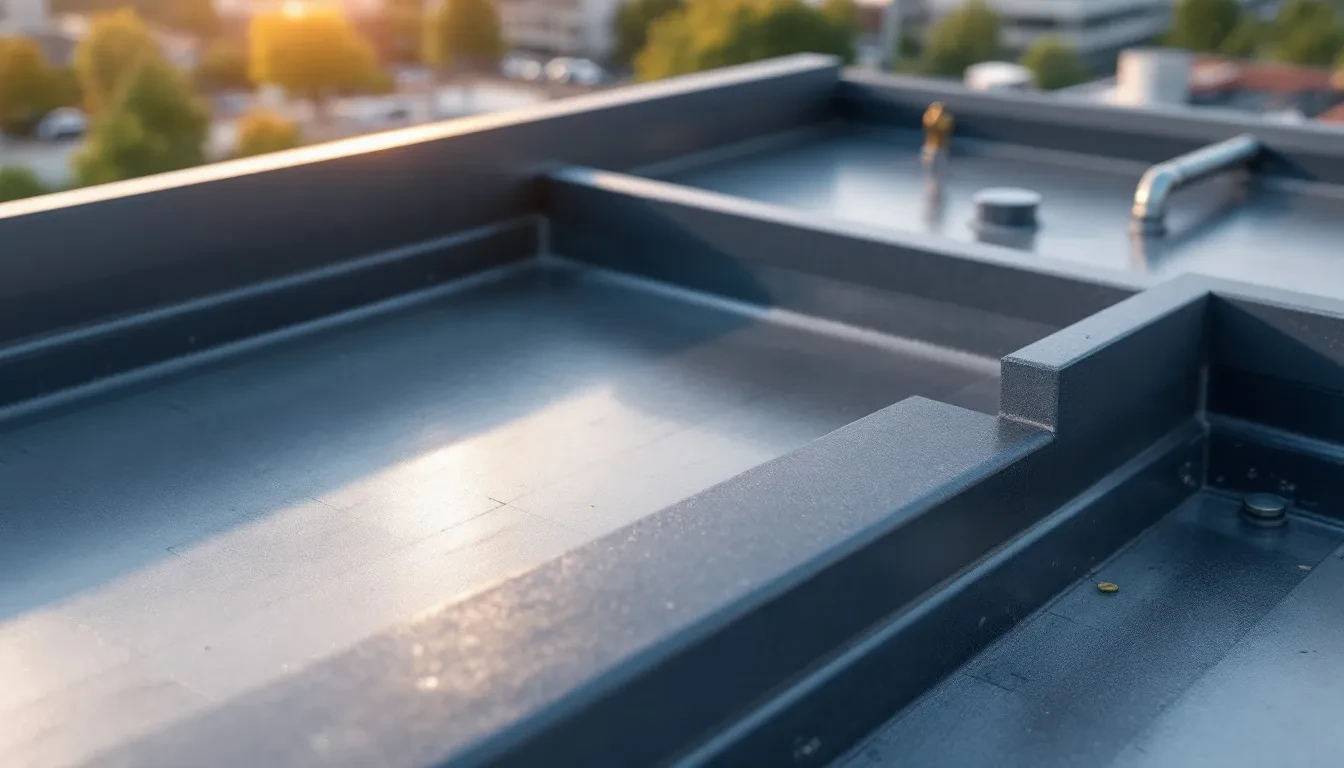
The per square foot number in a quote is the output of several different inputs rather than a fixed price. A building with a simple rectangular shape will have a different rate than a building with complex geometry. To understand the broader cost picture for your facility, you can review our guide on roof replacement cost. Understanding these variables helps you interpret a commercial roof bid and identify where your money is being allocated.
Materials and System Choice
The type of membrane, the thickness of the material, and the attachment method, whether it is adhered, mechanically fastened, or ballasted, all change the material cost. Additionally, the specific type of insulation used will impact the final roof cost. Higher-spec systems generally cost more upfront. These systems are often chosen because they offer better service life and performance for the building.
Tear-Off, Deck Condition and Hidden Damage
A full tear-off costs more than a recover. A recover is an option only if the existing roof is dry and if the manufacturer and local building codes allow it. During a tear-off, contractors often find wet insulation or rotted deck sections. This is why professional bids should include a stated unit price for deck and insulation replacement rather than a vague allowance. Performing moisture surveys before bidding can help reduce unexpected costs.
Access, Safety and Scheduling
Logistics play a role in the total price. If a project requires crane or hoist access, or if the site is tight, costs will rise. Working over occupied space, performing work on nights or weekends, and meeting specific safety requirements add labor and equipment expenses. In Houston, weather delays are a schedule factor. Ask how the contractor protects an open roof overnight.
Cost Breakdown by Roofing System: TPO, Modified Bitumen, EPDM & More
Relative cost depends on the specific system chosen for the building. The right pick is the one whose total lifetime cost fits the long term needs of your building.
| System | Relative Upfront Cost Position | Seam Method | Best Fit |
|---|---|---|---|
| TPO | Mid-range | Heat-welded | Reflective performance and energy management |
| Modified Bitumen | Mid-range | Torch, adhesive, or self-adhered | High foot traffic and multi-layer redundancy |
| EPDM | Lower | Adhesive or tape | Standard single-ply requirements |
| Metal | Higher | Mechanical or standing seam | Long-term durability for specific profiles |
| Coating | Lower | Liquid application | Restoration of existing sound roofs |
These positions are general tendencies; you should confirm specific system pricing in your formal bids.
TPO Membrane
TPO is a single-ply membrane that uses heat-welded seams to create a continuous barrier. It is a common choice for commercial buildings because of its white reflective surface. This surface uses the principle of reflecting sunlight to help manage building temperature. However, energy savings depend on your specific building insulation, HVAC efficiency, and usage patterns. Instead of relying on generic payback claims, ask your contractor to model how a reflective membrane might impact your specific facility. Ultimately, seam quality and installer workmanship matter more than any brochure claims regarding the material itself.
Modified Bitumen
Modified bitumen is a multi-ply asphalt based system that can be installed via torch, cold applied, or self-adhered methods. It typically features a granulated or coated cap sheet. The main strengths of this system are the redundancy provided by multiple layers and a high tolerance for foot traffic. The primary tradeoffs involve increased labor requirements, and open flame rules may affect which installation method is available for your site. Houston owners frequently compare modified bitumen directly with TPO, but the final decision depends on your rooftop equipment, expected traffic, and budget.
EPDM and Other Options
EPDM is a rubber single-ply membrane that typically uses adhesive or tape seams. While it is a reliable option, it is sensitive to seam installation. Other alternatives include metal systems or coating and restoration options, which might be suitable if your existing roof is still structurally sound. When evaluating different systems, do not just ask about the initial price. Ask your contractor to explain why a specific system is the best technical fit for your building's unique profile and operational requirements.
How Houston's Climate Affects Your Flat Roof Replacement Budget
The weather in Houston places specific stress on a flat roof, which influences your replacement budget. Long, hot summers subject the membrane to UV radiation and extreme heat. Frequent and heavy rain events require high-performance drainage systems to prevent ponding water. Tropical storm exposure and high winds can lift edges that are not properly secured, making wind-rated attachment methods a necessary part of the specification.
To mitigate these environmental factors, owners often choose specific design elements. These include selecting a reflective membrane to manage heat, ensuring well-adhered or welded seams for water tightness, and installing robust edge metal. For proper drainage, tapered insulation may be required to direct water toward drains, scuppers, or overflows. While reflective roofs can reduce heat gain, results depend on the building's insulation, HVAC configuration, and usage. You should ask a contractor for building-specific modeling rather than relying on generic payback claims.
When dealing with storm-damage claims, document all damage with dated photos. Read your policy to understand wind versus water coverage and your specific deductibles. It is important to mitigate further damage after a storm event and obtain a written scope from a roofer before agreeing to any work. Policy rules and coverage requirements vary between different insurers.
Flat Roof Replacement Cost by Building Size and Roof Complexity
The total replacement budget for a commercial flat roof is heavily influenced by the scale of the project. Generally, larger roofs tend to have a lower unit cost because setup, mobilization, and supervision are spread across a larger area. Smaller roofs typically carry a higher per square foot cost because the fixed costs of getting a crew and materials to the site represent a larger percentage of the total job.
Beyond simple square footage, the geometry and complexity of the building drive labor costs up. Higher costs often occur when your roof has many penetrations or complex features, such as:
- Rooftop units that require electrical disconnect and resetting
- Skylights and multiple curb heights
- Parapets and varied wall elevations
- Tight corners or multiple roof levels
To ensure you can compare bids on equal terms, ask whether all bidders use the same measured roof area. Check if flashings and specific details are priced separately or bundled into a general unit price. If you are managing an occupied building, consider a phased replacement. Replacing the roof in sections can limit noise and disruption for tenants, though it may increase costs due to temporary tie-ins and additional mobilization. Owners should ask about the implications of phasing in their bid. Finally, request a roof plan marked with penetrations and equipment so every bidder prices the same thing.
Drainage, Insulation, and Code Requirements That Add to Your Cost
A lowball bid for a commercial roof replacement often hides omissions in the technical components required by modern building standards. While the membrane is the most visible part of the project, the underlying systems for moisture management, thermal protection, and legal compliance represent essential cost factors. Understanding these line items helps prevent budget creep during a project.
Drainage and Ponding
Even a flat roof requires a specific slope to ensure water flows toward the collection points. Ponding water is a major risk because it accelerates membrane wear and can void some warranties. To prevent this, a new installation may require tapered insulation to create the necessary pitch. Other cost items include resizing existing drains, installing scuppers, or adding overflow systems. Verify whether these drainage solutions are included in the quote or listed as separate line items.
Insulation and Energy Code
Replacing a commercial roof usually triggers current energy code requirements for the building. The contractor should confirm the required R-value for the building to ensure compliance rather than simply assuming the old insulation thickness is sufficient. The type and thickness of the insulation directly affect both the total roof replacement cost and the long-term thermal performance of the building. Request that the insulation type and thickness be listed as a separate line item in your estimate to ensure you are comparing identical specs.
Permits and Inspections
Commercial roof replacement generally requires a building permit and inspections to ensure the work meets local standards. Requirements vary between different Houston-area jurisdictions, so the contractor should confirm the specific needs with the local building authority for your property's exact location. When reviewing a bid, determine who is responsible for pulling the permit, who pays the fee, and whether those costs are already included in the total project price.
Roof Repair vs. Full Replacement: How to Decide in Houston
Deciding between a quick repair or a complete roof replacement depends on the current state of your building envelope. A plain decision rule is to opt for a repair when damage is local, the membrane and insulation are mostly dry and sound, and your repair history is short. In these cases, addressing specific leaks or small patches can extend the life of the system without the immediate expense of a full overhaul.
A full roof replacement becomes the more economical choice when moisture is widespread, seams are failing across the roof, or repairs keep recurring. Watch for signs like repeated leaks in different areas, blistering, open seams, ponding that persists, or soft spots when walking the surface. A moisture survey that reveals wet insulation is a strong indicator that a full replacement is necessary. Coatings or a recover are middle options; a coating requires a sound existing membrane, while a recover requires a dry, structurally sound system allowed by code and the manufacturer. Always ask a contractor to explain why a recover is or is not viable for your building.
Owners often explore equipment-style financing, lenders, or phased capital budgeting for large projects; consult your lender or accountant regarding these options. Consider the cost of delay, as leaks can damage interiors, inventory, and tenants. Before deciding, get a condition assessment with photos and moisture readings to use as an input for your budget planning.
What to Look for When Hiring a Houston Commercial Roofing Contractor
The cheapest bid is rarely comparable. Vetting should happen before you request a formal quote to ensure you are comparing similar scopes of work.
How to Compare Bids Line by Line
To ensure an even comparison, ask for the same scope in every bid. You should see the measured area, whether the job is a full tear-off or a recover, the specific insulation type and thickness, and all necessary drainage work. Check if flashings, edge metal, permits, cleanup, and deck repair unit prices are included. Look for allowances and exclusions, as a short bid usually means a missing scope item. Ensure the manufacturer system and thickness are named and that warranty terms are provided in writing.
Red Flags After a Storm
Be cautious of door-to-door storm chasers, high-pressure tactics to sign immediately, large upfront cash payments, a lack of a local office or physical address, and offers to absorb your insurance deductible. Verify a contractor's license, bond, and insurance certificates directly with the provider and check references before signing anything for a Houston commercial roof replacement.
Manufacturer vs. Contractor Warranty
It is vital to understand the difference between these two protections. The manufacturer warranty covers material defects and sometimes specific system performance. The contractor warranty covers workmanship and installation problems. When reviewing bids, ask what is specifically excluded from each, who is responsible for inspecting the work, and whether the warranty remains valid and transfers if the building is sold.
Why RJT Construction Is Houston's Trusted Commercial Roofing Partner
RJT Construction serves as a Houston commercial general contractor and commercial roofer for property owners, developers, and managers. We serve Houston, Harris County, and the Greater Houston area. Our company is licensed, bonded and fully insured, and we maintain a 4.9 Google rating across 115 reviews. When you are planning a commercial roof replacement, you need more than a generic estimate. We provide a written project quote that addresses the specific cost drivers detailed in this guide, such as membrane selection, insulation thickness, drainage requirements, and site access. This itemized approach ensures that the scope of work and the specific conditions of your building are addressed line by line, preventing the hidden costs often found in vague bids. Our goal is to provide the technical detail required for accurate capital budgeting and facility planning.
To see our broader range of work, visit our commercial construction projects page. For your specific project needs, Request a Project Quote or call (832) 492-3213.
FAQ
How much does a commercial flat roof replacement cost in Houston?
Determining a commercial flat roof replacement cost requires a site walk because the total depends on the system selected, roof area, complexity, and the condition of the underlying deck and insulation. You should also consider site access as a factor. Ask a contractor for an itemized written estimate to get a reliable figure for your building. Refer to our section on cost drivers for more details.
How much does a commercial flat roof replacement cost in Texas overall?
There is no useful statewide figure because wind, hail, heat and local building codes vary by region and specific building type. While the same fundamental cost drivers apply across Texas, Houston adds unique requirements for humidity, heavy rain, and storm exposure that can influence the technical specifications and final price.
What is the average cost per square foot for commercial roofing in Houston?
Per square foot figures only provide a fair comparison when the scope of work is identical across all bids. To compare accurately, ensure every quote covers the same items: tear-off, insulation thickness, flashings, drainage improvements, and warranty terms. Without identical scope, a per square foot number is not a reliable budgeting tool.
Is TPO or modified bitumen the better choice for Houston commercial buildings?
Both systems have specific advantages. TPO offers a reflective surface and heat-welded seams, which can help with solar heat gain. Modified bitumen provides a multi-layered, redundant build-up that handles foot traffic well. The better choice depends on your building traffic, rooftop equipment, budget, and specific usage. Ask your contractor to justify their recommendation for your building.
How long does a commercial flat roof last in Houston's climate?
Service life depends on the specific system chosen, the quality of the installation, the drainage design, and your maintenance schedule. The intense heat and frequent storms in Houston can shorten the life of a roof if the membrane, seams, or edge attachments are weak. Always ask for the manufacturer's rated life and the contractor's maintenance requirements.
When should I repair my flat roof instead of replacing it?
Repair is often appropriate when damage is localized, the membrane and insulation are mostly dry and sound, and your repair history is relatively short. You should consider a full replacement if moisture is widespread, seams are failing across large areas, or if you find that repairs are recurring frequently. A moisture survey can help you decide.
Does Houston require permits for commercial roof replacement?
Commercial reroofing generally requires a permit and inspections to ensure compliance with local standards. Requirements depend on the exact jurisdiction and the scope of the work, so you should confirm requirements with the local building authority for your property. Ask your contractor if they will pull the permit and if the fee is included in your bid.
Can my building stay open during a commercial flat roof replacement?
Usually, yes, with proper planning. Contractors can phase the work by section, schedule noisy tasks during off-hours, protect HVAC intakes, and keep access routes safe for tenants. Because these logistical factors affect the project schedule and the total cost, you should ask for a detailed execution plan within your bid.
Ready to put a real number on your roof? Request a Project Quote from RJT Construction and have your scope, system options and itemized pricing laid out for your building. Call (832) 492-3213 if you would rather talk first.