
Houston Commercial Construction Cost Per Sq Ft 2026

If you are planning a commercial building project in Houston, the first question you need answered is: what will it actually cost per square foot? The honest answer is that commercial construction cost per square foot varies widely, from around $80 for basic shell construction to well over $400 for specialized medical or laboratory facilities. This guide breaks down those ranges by building type, explains what drives costs up or down in the Houston market specifically, and gives you a clear framework for budgeting your project in 2026.
Key Takeaways
- Houston commercial construction costs range from roughly $80 to $400 or more per square foot depending on building type, finishes, and site conditions.
- Hard costs cover physical construction; soft costs (permits, design, fees) typically add 15 to 30 percent on top of your base construction budget.
- Houston has no traditional zoning code, which speeds some approvals but shifts planning responsibility entirely to the owner and contractor.
- Ground-up construction and tenant improvement buildouts carry very different cost profiles; knowing which applies to your project is essential before budgeting.
- Getting a project-specific estimate from a licensed Houston contractor is more useful than any per-square-foot benchmark once your scope is defined.
How Much Does Commercial Construction Cost Per Square Foot in Houston in 2026?

Houston commercial construction costs in 2026 fall into broad ranges based on building type and finish level. According to industry data from RSMeans and reporting from the Associated General Contractors of America (AGC), national averages have shifted upward since 2022, and Houston tracks close to the national median with some local advantages in labor availability.
Broad Cost Ranges for Houston in 2026
- Shell-only construction: $80 to $130 per square foot
- Standard office or retail buildout: $130 to $220 per square foot
- Medical office or clinical space: $250 to $350 per square foot
- Specialized laboratory or cleanroom: $350 to $500 or more per square foot
- Warehouse or light industrial: $60 to $120 per square foot
- Multistory commercial office: $200 to $350 per square foot
These figures represent total construction costs houston-based owners can expect for hard construction only. Soft costs, site work, and utility connections are additional. For a more precise number on your specific project, a detailed estimate from a local contractor will always outperform a benchmark figure.
Commercial Construction Cost Ranges by Building Type in Houston
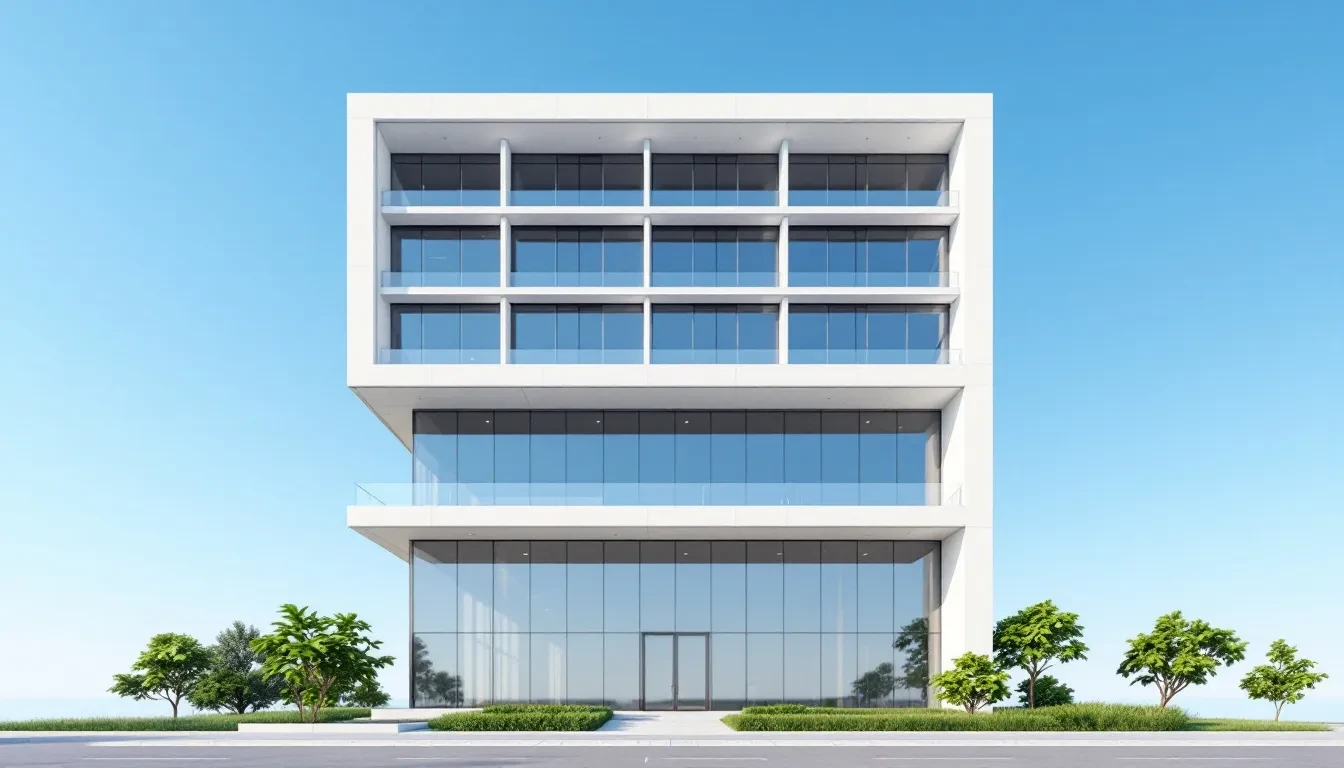
Not all commercial buildings cost the same to build. The type of occupancy, structural system, and required mechanical complexity drive costs more than almost any other factor.
Warehouse and Light Industrial
Warehouse and distribution facilities remain among the most cost-efficient building types in Houston. Tilt-wall concrete construction, common across Harris County, typically runs $60 to $120 per square foot for the building shell and basic interior. HVAC, dock equipment, and fire suppression add to that total depending on the use.
Retail and Restaurant
Retail shell space ranges from $100 to $160 per square foot. Full restaurant construction, with commercial kitchen requirements, grease intercept systems, and heavy HVAC, commonly runs $200 to $350 per square foot. Tenant improvement buildouts for existing retail shells range from $40 to $100 per square foot depending on scope.
Office Space
Standard single-story office construction in the Greater Houston area runs $130 to $200 per square foot for a turnkey buildout. Multistory buildings with elevator systems, structured parking, and higher-end finishes push costs to $250 to $350 per square foot or more.
Medical and Specialized Facilities
Medical office buildings and clinical facilities carry the highest cost per square foot for commercial construction in Houston. Specialized plumbing, medical gas systems, reinforced flooring, and compliance with healthcare facility requirements drive costs from $250 to $500 or more depending on the level of care delivered on site.
Hard Costs vs. Soft Costs: What's Included in Your Per-Square-Foot Price
One of the most common budgeting mistakes is treating the per square foot construction cost as the total project cost. It is not. Your total project investment has two major categories: hard costs and soft costs.
Hard Costs
Hard costs are the physical costs of building: labor, materials, structural systems, mechanical, electrical, plumbing, roofing, concrete, steel, site work, and finishes. When a contractor quotes you a price per square foot, this is almost always what they are pricing. For commercial construction, hard costs typically represent 70 to 80 percent of a project's total budget.
Soft Costs
Soft costs are everything else that must be paid for a building to get built and occupied. Budget 15 to 30 percent of your hard cost total for soft costs, which include:
- Architectural and engineering design fees (typically 5 to 15 percent of construction cost)
- Houston Permitting Center fees (varies by project size and type)
- Geotechnical and environmental reports
- Utility connection and impact fees
- Survey and title work
- Construction loan interest and financing costs
- Owner's project management or representative fees
- Furniture, fixtures, and equipment (FF&E)
Ground-Up Construction vs. Tenant Improvement Buildout
Ground-up construction means building on raw land or a cleared site. It carries the full cost of foundations, structural systems, envelope, and all building systems. Tenant improvement (TI) buildout starts with an existing shell or partially completed space. TI projects are typically far less expensive per square foot because the structure, roof, and envelope already exist. However, TI costs vary enormously based on how complete the existing shell is and what the new use requires. A simple office buildout in an existing shell might cost $40 to $80 per square foot, while converting a warehouse to food-grade manufacturing could exceed $150 per square foot in buildout costs alone.
Key Factors That Affect Commercial Construction Costs in Houston
Houston is not a uniform market. Costs shift based on location within Harris County, the type of site, current labor conditions, and material prices. Understanding these variables helps you build a more accurate budget from the start.
Material and Labor Costs in 2026
Structural steel prices have moderated from the extreme highs of 2021 to 2022 but remain above pre-pandemic levels. Concrete costs in Houston have also stabilized, though ready-mix prices are sensitive to fuel costs and local demand from ongoing infrastructure projects. Labor in the Houston construction market is competitive, with a large skilled trade workforce, but specialized subcontractors for HVAC, electrical, and medical build-outs still carry lead times that affect scheduling and cost.
Supply Chain Conditions
In 2026, supply chain delays are less severe than in 2021 to 2023, but long lead-time items like electrical switchgear, elevators, and custom curtainwall systems still require planning. Projects that lock in material procurement early typically avoid schedule-driven cost overruns.
Site Conditions in Houston
Houston's expansive clay soils are notorious for movement. Foundation systems that work in other markets often require deep piers or engineered slabs in Harris County. Poor drainage and high water table conditions on many Houston sites also increase site work costs. A geotechnical report before finalizing your construction budget is not optional; it is essential.
Houston's Lack of Zoning Laws
Houston is the largest city in the United States without traditional zoning. This is a meaningful planning consideration. Without zoning, there is no automatic land-use segregation, which means mixed-use development and site selection for commercial projects can be more flexible in Houston than in other major metros. However, it also means that deed restrictions, development agreements, Chapter 42 subdivision regulations, and Houston's floodplain rules serve as the effective land-use controls. Navigating these requirements adds planning time and sometimes legal review costs that owners in zoned cities do not face. Projects near floodways or within the 100-year floodplain face additional requirements that can significantly affect site development costs.
Houston Permitting Costs and Timelines
Commercial building permits in Houston are issued through the Houston Permitting Center. Permit fees are calculated as a percentage of the declared project value and vary by project type. For a $2 million commercial project, permit fees typically range from $15,000 to $30,000 or more depending on occupancy type and scope. Plan review timelines for new commercial construction commonly run four to twelve weeks for standard projects. Complex or specialized facilities can take longer. Budget both the fee and the review timeline into your pre-construction schedule, because construction cannot legally start until the permit is issued.
How to Budget Your Houston Commercial Construction Project
A realistic project budget is built in layers, not from a single number. Here is a practical planning sequence for commercial property owners and developers in Greater Houston.
Step 1: Define Your Scope Before Asking for Numbers
A square-foot price means little without a defined scope. What type of building? How many stories? What occupancy classification? Ground-up or buildout? The more detail you can provide, the more accurate an early estimate will be. Providing a clear program (square footage by use, required systems, finish level expectations) to a contractor or design team at the outset saves time and produces a budget you can actually plan around.
Step 2: Separate Hard Costs from Soft Costs in Your Budget
Build your budget in two columns from the start. Use the contractor's construction cost estimate as your hard cost baseline. Then add soft costs as a separate line: design fees, permit fees, testing, inspections, and owner-side costs. Many projects go over budget not because construction costs exceeded the estimate, but because soft costs were never budgeted at all.
Step 3: Include a Contingency
A construction contingency of 10 to 15 percent of the hard cost budget is standard practice for commercial projects. For renovation or adaptive reuse projects where existing conditions are unknown, 15 to 20 percent is more appropriate. A contingency is not padding; it is professional budget management.
Design-Build vs. General Contractor: How the Delivery Model Affects Cost
In a design-build model, a single firm handles both design and construction. This can compress the pre-construction schedule and reduce coordination gaps, but it limits the owner's ability to competitively bid the construction phase. A traditional general contractor model allows the owner to work with an architect of their choosing and then bid construction separately, which can increase cost transparency. Neither model is universally cheaper; the right choice depends on project complexity, schedule requirements, and the owner's capacity to manage a split team.
When to Get a Detailed Estimate vs. a Ballpark Figure
A ballpark square-foot number is useful for early feasibility: can this project pencil out at all? A detailed estimate, built from actual drawings and specifications, is what you need before committing to a site, signing a construction contract, or closing a construction loan. Do not confuse the two. A detailed estimate requires completed or substantially completed construction documents. Asking for a firm price before the design is complete leads to either inaccurate numbers or a contract loaded with exclusions and allowances that shift risk to the owner.
Hidden Costs to Plan For and How to Manage Them
Every commercial project has costs that do not show up in the initial construction estimate. The owners who are least surprised at closeout are the ones who planned for these line items from the beginning.
Common Hidden Costs in Houston Commercial Construction
- Utility extensions and upgrades: Connecting to city water, sewer, and electrical service on undeveloped or partially developed sites can cost $50,000 to $300,000 or more depending on proximity and capacity requirements.
- Floodplain compliance: Many Houston sites require elevation certificates, floodplain development permits, or fill operations that add directly to site work costs.
- Testing and inspections: Third-party special inspections for concrete, steel, and soils are required on most commercial projects and are paid by the owner, not the contractor.
- Temporary facilities and logistics: Construction trailers, temporary power, fencing, and site security for larger projects are real costs that sometimes go unbudgeted.
- Owner-furnished equipment: If the owner is procuring equipment separately (kitchen equipment, medical equipment, manufacturing machinery), coordination with the contractor is critical and delays in equipment delivery can extend the schedule and increase cost.
- Post-occupancy costs: Certificate of occupancy inspections, final utility connections, and any punch list work that extends the contractor's presence on site all carry costs that belong in the project budget, not the operating budget.
How to Control Costs Without Cutting Quality
The most effective cost control strategy in commercial construction is early decision-making. Changes made during design cost far less than changes made during construction. Lock in your program, finishes, and systems choices before construction documents are complete. Work with your contractor to identify long-lead items early and purchase them before prices move. For material selection guidance, see our related resource on cost-effective building materials for commercial construction, and our overview of cost-effective methods for modern commercial construction.
Frequently Asked Questions About Houston Commercial Construction Costs
How much does commercial construction cost per square foot in Houston in 2026?
Commercial construction cost per square foot in Houston in 2026 ranges from approximately $60 to $120 per square foot for basic warehouse and industrial shell construction, $130 to $220 for standard office or retail buildout, and $250 to $500 or more for medical, laboratory, or highly specialized facilities. These are hard construction costs only. Add 15 to 30 percent for soft costs including design, permitting, and owner-side expenses.
What does commercial construction cost in Houston in 2026?
Total project cost for commercial construction in Houston depends on building type, size, site conditions, and finish level. A straightforward 10,000-square-foot office buildout might total $1.5 million to $2.5 million including soft costs. A ground-up 20,000-square-foot medical facility could run $6 million to $10 million or more. Use these ranges for feasibility only; a project-specific estimate from a licensed Houston contractor is required before committing capital.
What is the difference between shell construction and full buildout costs in Houston?
Shell construction delivers a building that is structurally complete with a roof and exterior walls, but with no interior finishes, interior partitions, or tenant-specific mechanical systems. Shell construction typically costs $80 to $130 per square foot for commercial buildings in Houston. Full buildout adds interior construction, HVAC distribution, electrical, plumbing, finishes, and fixtures. The total cost of a fully built-out space is usually 60 to 120 percent higher than the shell cost alone, depending on the use and finish level.
What factors cause commercial construction costs to vary so much in Houston?
The primary drivers are building type and occupancy (a warehouse costs far less than a hospital), finish level (basic versus custom), structural system (wood frame versus tilt-wall concrete versus steel), site conditions (foundation requirements in Houston's clay soils vary widely), current material prices, labor market conditions, and project-specific requirements like fire suppression, accessibility compliance, and energy code compliance. Location within Harris County and Greater Houston also matters; sites in developed areas with existing utilities cost less to build on than raw land requiring new utility extensions.
How much should I budget for soft costs on a Houston commercial construction project?
Budget 15 to 30 percent of your hard construction cost for soft costs. For a $2 million construction project, that means $300,000 to $600,000 in additional costs for design fees, Houston Permitting Center fees, geotechnical and environmental reports, utility connections, inspections, and owner-side project management. Many owners underestimate soft costs because they focus only on the contractor's bid. A complete project budget includes both.
Is it cheaper to renovate an existing commercial building or build new in Houston?
Renovation is often less expensive per square foot than ground-up construction, but not always. If the existing building has significant structural, mechanical, or code compliance issues, renovation costs can approach or exceed new construction costs. The comparison also depends on land cost, which is a major variable in the Houston market. A detailed assessment of any existing building's condition by a licensed contractor before deciding is essential. For some uses, particularly manufacturing or food processing, new construction is almost always more cost-effective because the specific infrastructure requirements are so far from what most existing buildings provide.
How long does a typical commercial construction project take in Houston?
Project duration depends on size and complexity. A small tenant improvement buildout of 2,000 to 5,000 square feet typically takes six to twelve weeks of construction time after permit issuance. A ground-up commercial building of 10,000 to 30,000 square feet commonly requires six to fourteen months from groundbreaking to certificate of occupancy. Add four to twelve weeks for Houston Permitting Center plan review before construction can start. Large or complex projects take longer. Schedule planning should start with permitting timelines, not construction timelines, because the permit process is often the longest fixed constraint in a Houston commercial project.
Does Houston's lack of zoning laws affect commercial construction costs?
Yes, in several ways. Without traditional zoning, Houston commercial projects are governed by deed restrictions, development agreements, and city regulations including Chapter 42 and floodplain rules. Verifying that a proposed use is permitted on a specific site requires a careful review of recorded deed restrictions, which can require legal review and adds time and cost to the pre-development process. On the other hand, the absence of zoning can reduce land cost in some corridors and allow mixed-use development that would require variances in other cities. Floodplain regulations are particularly important in Houston; the city has implemented increasingly strict standards after major flood events, and many commercial sites require elevation or drainage improvements that add meaningfully to site development budgets.
RJT Construction is a family-owned commercial general contractor serving Houston, Harris County, and the Greater Houston area since 2008. Licensed, bonded, and fully insured, RJT self-performs core trades with in-house crews on commercial construction, commercial roofing, concrete, steel erecting, and site work. For a complete overview of completed commercial projects, visit the RJT Construction commercial projects page.
Ready to get a project-specific number for your Houston commercial construction project? Request a Project Quote from RJT Construction.
Published by RJT Construction. For questions, contact us at rjt-constructionllc.com/contact.