Essential Types of Insurance Every Commercial Construction Company Must Consider for Comprehensive Protection
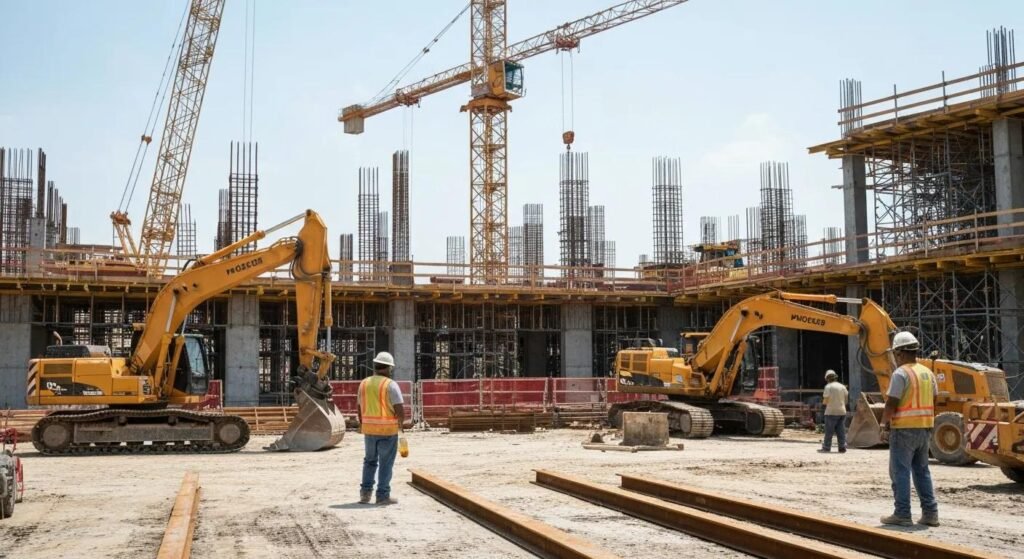
Commercial construction insurance is the umbrella of policies and endorsements a contractor needs to transfer and manage risks that arise across planning, active building, and post-completion operations, and it exists primarily to protect cash flow, contractual standing, and reputation. This article explains which insurance types matter most to commercial construction firms, how each policy functions, when to buy coverage during project phases, and how local factors in Houston, Texas shape insurance priorities. Readers will learn clear definitions, risk-to-policy mappings, and practical purchasing guidance that decision-makers and project managers can use to structure compliant, budget-aligned programs. The guide covers general liability, workers’ compensation (with Texas notes), builders risk (course of construction), professional liability, commercial auto and inland marine, surety bonds, pollution and cyber exposures, and additional specialized options that are trending in 2024–2025. After describing coverage mechanics and example loss scenarios, the article maps insurance choices to project milestones and highlights site-maintenance measures that complement insurance protections. Throughout, semantic connections between exposures, policy mechanisms, and business continuity will make it easier to prioritize coverages for specific project types and procurement requirements.
What Is Commercial Construction Insurance and Why Is It Critical?
Commercial construction insurance is a coordinated program of policies designed to address third-party liability, employee injury, property loss during construction, professional errors, and specialized operational risks. It works by shifting the financial consequences of covered losses from the contractor or owner to an insurer through indemnity, defense cost payment, and loss-adjustment processes, thereby preserving working capital and enabling project completion. The primary benefits include legal compliance on permitted projects, risk mitigation to protect client relationships, and financial protection that prevents a single event from jeopardizing business continuity. Local regulations and contract clauses in Houston often make certain coverages mandatory for bidding and performance, and these contractual requirements further increase the strategic value of a comprehensive insurance program.
How commercial construction insurance operates in practice depends on the coverage mix and policy wording; understanding that mix helps map exposures to specific policies and tactical controls. The following subsections explain the protection mechanisms and the Houston-specific risks that shape insurance needs.
How Does Commercial Construction Insurance Protect Your Business?
Commercial construction insurance protects a business by providing contractual indemnity, defending lawsuits, paying settlements, and funding repairs or replacements when covered perils occur. For example, when a passerby is injured by falling debris, general liability covers third-party bodily injury and legal defense costs, while builders risk can cover the damaged structure and materials on site; together these policies prevent out-of-pocket catastrophe expenses that would disrupt cash flow. Insurance also preserves reputation by ensuring timely indemnity and claims handling that let contractors meet warranty or corrective obligations without insolvency. Recognizing these mechanisms — indemnity, defense, and replacement — helps project managers structure limits, endorsements, and deductibles that align with contract values and client expectations.
This protection logic leads directly into why local conditions in Houston require particular attention when choosing coverages and limits.
What Are the Key Risks Faced by Commercial Construction Companies in Houston?
Houston construction projects encounter weather-related perils, heavy equipment transit exposures, dense urban site constraints, and workforce safety challenges that increase the frequency and severity of claims compared with other regions. Seasonal storms and localized flooding can damage materials and delay schedules, making builders risk and flood endorsements particularly relevant, while urban logistics raise likelihood of third-party property damage and traffic incidents that implicate commercial auto coverage. Theft and vandalism of equipment and materials at unsecured sites also create inland marine and contractors’ equipment exposure that many firms underinsure. Understanding these Houston-specific hazards enables contractors to prioritize perils during procurement and to adopt operational mitigations that reduce premiums and claims.
Mapping these regional exposures to policy choice and timing naturally leads into the detailed discussion of general liability, the foundation of most commercial construction programs.
What Is General Liability Insurance for Contractors and Why Is It Essential?
General liability insurance for contractors is the core third-party policy that pays for bodily injury, property damage, advertising injury, and completed operations claims resulting from construction activities. It functions by defending covered claims and indemnifying the insured up to policy limits, protecting a contractor’s balance sheet from litigation and settlement costs that can exceed immediate cash resources. The essential value is contractual: many owners and prime contractors require evidence of general liability to award work, and banks or sureties may condition financing or bonding on robust GL coverage. In practical terms, GL provides the baseline protection every commercial construction company should carry to meet client expectations and survive a serious third-party loss.
What Does General Liability Insurance Cover in Construction Projects?
General liability typically covers third-party bodily injury occurring on or off the job site, third-party property damage caused by operations, advertising injury claims, and completed operations liabilities that arise after a job is finished. Policy limits often come in split formats (per occurrence and aggregate) and contractors commonly add endorsements for contractual liability, waiver of subrogation, and additional insured status for project owners. Common exclusions include employee injuries (handled by workers’ compensation), professional errors (handled by professional liability), and pollution unless a specific endorsement is purchased. Knowing these distinctions helps contractors negotiate contracts and identify endorsement needs before mobilizing crews.
General liability coverages create predictable defenses against common lawsuits, which is why firms should align limits with contract values and client requirements.
| Coverage Area | Typical Policy Treatment | Practical Note |
|---|---|---|
| Third-party bodily injury | Covered, defense included | Required by most owners and lenders |
| Third-party property damage | Covered when caused by operations | Add endorsements for contractual liability |
| Completed operations | Covered post-completion exposures | Important for warranty and latent defect claims |
| Employee injuries | Excluded (workers’ comp covers) | Purchase workers’ compensation separately |
| Professional errors | Excluded (E&O/Professional Liability) | Consider professional liability if offering design services |
How Does General Liability Insurance Mitigate Lawsuit and Financial Risks?
General liability mitigates lawsuit and financial risk by funding legal defense costs from the first notice of claim, negotiating settlements when appropriate, and indemnifying the insured against covered judgments up to policy limits. Insurers typically appoint defense counsel and manage claims to limit exposure, which preserves corporate cash flow and avoids business interruption caused by litigation. For example, a subcontractor-caused water leak that damages a tenant’s finished space can result in a claim for property damage and business interruption; GL pays defense costs and settlements for covered elements, preventing the contractor from absorbing large legal expenses directly. Effective risk transfer through GL also supports contract compliance and client confidence, increasing a contractor’s ability to win bids.
Why Is Workers’ Compensation Insurance Vital for Construction Companies?
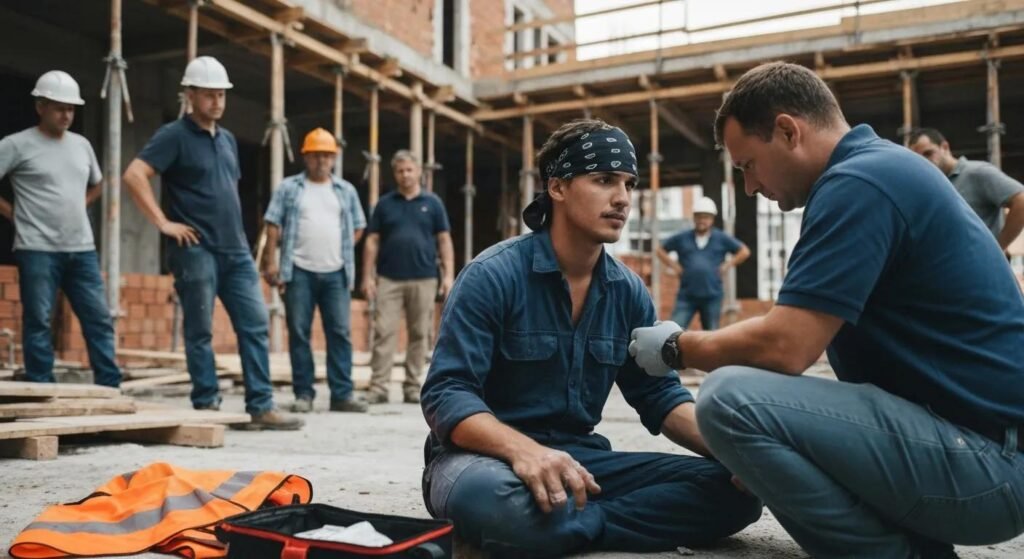
Workers’ compensation insurance provides medical benefits, wage replacement, and rehabilitation support to employees injured on the job while shielding employers from most direct tort liability for those injuries. It operates as a no-fault system in many states, ensuring timely care for injured workers and predictable employer obligations while reducing litigation risk. For construction firms, where the frequency and severity of workplace injuries are relatively high, workers’ compensation is both a legal compliance and workforce-management tool that supports safety programs and return-to-work initiatives. Investing in appropriate workers’ compensation coverage and claim-management processes reduces indirect costs such as lost productivity, higher experience-modifier rates, and reputational damage with clients and regulators.
What Are Workers’ Compensation Requirements for Construction Companies in Texas?
Texas does not require most private employers to carry workers’ compensation insurance. However, employers who contract with government entities are required to provide workers’ compensation coverage for each employee working on the public project. This requirement applies to all contractors and subcontractors involved in building or construction projects for governmental entities, regardless of the project’s dollar amount. (tdi.texas.gov)
Employers without workers’ compensation insurance coverage must report to the state that they do not have coverage and must also report to the Division of Workers’ Compensation any work-related injuries resulting in more than one day of lost time, as well as all work-related illnesses and deaths. (tdi.texas.gov)
Employers with workers’ compensation insurance coverage must report to their insurance carrier any work-related injuries resulting in more than one day of lost time, and all work-related illnesses and deaths. (tdi.texas.gov)
Employers can provide workers’ compensation coverage by purchasing a policy from a licensed insurance company, self-insuring, or joining a self-insurance group. It’s important to buy workers’ compensation insurance only from companies licensed by the Texas Department of Insurance. (tdi.texas.gov)
Employers who choose not to have workers’ compensation insurance, known as non-subscribers, lose certain common-law defenses if an injured employee files a negligence suit. (gov.texas.gov)
Employers can obtain workers’ compensation coverage through licensed insurance companies, including the Texas Mutual Insurance Company. (gov.texas.gov)
Employers can also self-insure their workers’ compensation claims or join a self-insurance group. Large private employers may self-insure their workers’ compensation claims, but they must get approval from the Division of Workers’ Compensation and meet financial requirements. (tdi.texas.gov)
Cities and counties may buy coverage from insurance companies, self-insure, or join with other cities and counties that self-insure. (tdi.texas.gov)
For more information on workers’ compensation, employers can contact the Texas Department of Insurance Workers’ Compensation at 800-252-3439 outside Austin or 512-322-3495 within Austin. (gov.texas.gov)
How Does Workers’ Compensation Insurance Support Employee Medical Expenses and Lost Wages?
Workers’ compensation typically covers reasonable and necessary medical treatment for workplace injuries, provides wage replacement benefits when employees are temporarily unable to work, and may fund vocational rehabilitation for serious injuries that impair return to prior duties. Claims administration focuses on timely authorization of care, light-duty return-to-work options, and coordinated communication with treating providers to control costs and restore productivity. For employers, these mechanisms keep injured workers engaged with the company and limit incentive for third-party lawsuits by offering a defined benefit pathway. Thoughtful claim management reduces indirect costs such as overtime, retraining, and lost productivity tied to prolonged absence.
How Does Builders Risk Insurance Protect Construction Projects?
Builders risk insurance, also called course of construction insurance, protects the insured structure, materials, and temporary works while a project is in progress against perils such as fire, theft, vandalism, and certain weather events. It functions by indemnifying the owner or contractor (depending on the named insured) for direct physical loss to covered property, enabling repair or replacement without forcing project halt due to uninsured damage. Limits, deductibles, and named-peril vs. all-risk wording determine how comprehensive a builders risk policy will be, and endorsements for flood, wind, or earthquake are often necessary in regions with elevated exposure. Timely purchase and correct policy naming (owner versus contractor) are critical to avoid coverage disputes after a loss.
What Risks Does a Builders Risk Insurance Policy Cover?
Builders risk policies commonly cover fire, lightning, theft of stored materials, vandalism, collapse from covered perils, and transient weather damage, subject to policy definitions and exclusions; they frequently exclude flood, earthquake, mechanical breakdown, and pollution unless specifically endorsed. A typical claim example is a windstorm that damages partially completed roof decking; builders risk indemnifies repair costs for the damaged portion and helps cover associated delay expenses when the policy includes time element coverage. Endorsements can be added to extend coverage to transit of materials, tools, or to provide soft-costs coverage for delay-related expenses. Contractors should review exclusions carefully and purchase endorsements that match local hazard profiles.
| Policy Aspect | Typical Treatment | Purchase Timing |
|---|---|---|
| Covered perils | Fire, theft, vandalism, weather (named or all-risk) | Before groundbreaking or at material delivery |
| Limits/deductibles | Project value-based limits; deductibles vary | Match limit to contract value and bonding requirements |
| Endorsements | Flood, wind, soft costs, transit | Add when local hazards or logistics require |
When Should Builders Risk Insurance Be Purchased During Project Phases?
Builders risk should be purchased to begin at a clearly documented project milestone such as groundbreaking or the first materials delivery, and it should remain in force until substantial completion or the point the owner takes occupancy. Early purchase protects materials staged on site and crews during initial work, while renewal or extension options cover schedule overruns and change orders that increase project value. Coordination among owner, contractor, and lender is essential so the named insured and loss-payable clauses reflect contractual responsibilities and prevent post-loss coverage disputes. Properly aligning policy inception and expiration with project handoffs preserves coverage and facilitates swift recovery when losses occur.
What Is Professional Liability Insurance in Construction and When Is It Needed?
Professional liability insurance for construction — often called errors & omissions (E&O) — protects firms and professionals against claims alleging negligent design, faulty specifications, or errors in professional judgment that lead to economic loss or delay. It differs from general liability by focusing on financial harm caused by professional services rather than bodily injury or physical damage, and it pays defense and indemnity for covered professional negligence claims. Contractors, design-build firms, engineers, and specialty consultants who provide plans, specifications, or technical advice should evaluate professional liability limits because design-related mistakes can produce substantial repair and delay costs. The next subsections explain how professional liability responds to delays and typical claim scenarios where it becomes critical.
How Does Professional Liability Insurance Protect Against Construction Project Delays?
Professional liability can cover economic losses attributable to negligent design or specification errors that cause project delays, subject to policy terms and exclusions, by indemnifying the insured for third-party claims seeking recovery for delay-related costs. For instance, a miscalculated load-bearing specification that requires rework can trigger contractual claims for schedule extension and additional labor; professional liability addresses the claim for negligent design while builders risk addresses physical repairs. Limits and policy language (such as whether consequential damages are covered) determine the degree of protection, so firms should negotiate wording to reflect project risk allocation. Claim mitigation includes prompt error correction, robust documentation, and early notice to insurers to preserve coverage.
What Are Common Scenarios Where Professional Liability Insurance Is Critical?
Common triggers for professional liability claims include specification errors that lead to structural problems, incorrect calculations that force rework, coordination failures between design disciplines that cause costly delays, and inadequately reviewed shop drawings that introduce defects. Mini-case vignettes illustrate the stakes: a mis-specified foundation element leading to settlement, or incompatible HVAC specs that require expensive retrofit; both can prompt third-party claims for remediation and associated economic damages. Preventative measures — peer review, independent design checks, and design-phase quality controls — reduce frequency and severity of claims, while professional liability provides the financial backstop when errors occur. Firms should combine risk controls with appropriate limits and endorsements aligned to contract exposure.
Which Additional Insurance Types Should Commercial Construction Companies Consider?
Beyond the core policies, commercial construction companies should consider commercial auto for fleet liability, inland marine for tools and equipment in transit, surety bonds for contract performance, pollution liability for environmental exposures during site work, and cyber insurance to protect financial data and project systems. These specialized policies address exposures that frequently generate large, project-specific losses and contract prequalification requirements, and they are increasingly important as operations digitize and environmental scrutiny intensifies. Prioritization depends on project phase, client requirements, and local risks: inland marine and commercial auto matter during active transport and site work, while pollution and surety bonds are critical for demolition, remediation, and public-works contracts.
What Are Commercial Auto and Inland Marine Insurance Policies for Contractors?
- Commercial auto insurance covers liability and physical damage for vehicles owned or used by the business,
- inland marine insurance (also called contractors’ equipment floater) protects mobile equipment, tools, and materials while in transit or stored at job sites.
- Hired/non-owned auto: add when using leased vehicles or subcontractor transport.
| Coverage Type | What It Covers | When It’s Needed |
|---|---|---|
| Inland Marine / Equipment Floater | Tools, heavy machinery, materials in transit or on site | Active site operations with valuable movable assets |
| Commercial Auto | Liability and physical damage for owned vehicles | Transporting materials, crews, or operating a company fleet |
| Surety Bonds | Bid, performance, payment obligations under contract | Public works, owner-required bonding, subcontractor vetting |
| Pollution Liability | Cleanup and third-party injury/property claims from contaminants | Site work, demolition, or projects involving hazardous materials |
| Cyber Insurance | Data breaches, ransomware, business interruption from IT failure | Firms handling payroll, contracts, or connected job-site systems |
Why Are Surety Bonds, Pollution Liability, and Cyber Insurance Increasingly Important?
Surety bonds guarantee contractual performance and payment to subcontractors and suppliers, reducing owner risk and serving as a prequalification tool in bidding; failure to secure bonds can disqualify a contractor from many projects. (insurancebusinessmag.com)
Pollution liability has risen because site disturbances can reveal contaminated soils or trigger regulatory cleanup obligations that lead to large remedial bills and third-party claims. (insurancebusinessmag.com)
Cyber insurance has become essential as billing systems, payroll, plans, and project management platforms store sensitive data and depend on connectivity; ransomware or data breaches can delay projects and expose financial losses. (insurancebusinessmag.com)
Recent industry trends through 2024–2025 show increasing frequency of cyber incidents in construction and more stringent environmental due diligence, so prioritizing these coverages protects both balance sheet and contract eligibility.
Integrating operational risk controls such as site cleaning and HVAC maintenance reduces exposures that interact with insurance claims. Maintaining clean, well-ventilated interiors and regularly serviced air systems reduces dust, debris, and indoor contaminants that can exacerbate pollution claims or worker health incidents; similarly, organized sites and secure storage reduce theft claims that would otherwise stress inland marine or builders risk policies. RJT Construction, a family-owned general contracting firm based in Houston, Texas, emphasizes in-house labor, full insurance, and strong project management as risk controls, and firms that adopt similar operational discipline often see fewer claims and more favorable insurance outcomes.
Educate, inform, and generate local leads for air duct cleaning services and commercial cleaning services.