Understanding Project Timelines in Commercial Construction: Key Phases, Common Delays, and Effective Management
Accurate commercial construction project timelines define budget control, regulatory compliance, and timely occupancy, and they are central to successful delivery for owners and project teams. This guide explains how project timelines typically play out in commercial construction projects, outlines the phases of commercial construction, and highlights the most common delays in commercial construction so stakeholders can anticipate impacts and plan mitigations. Readers will learn the standard commercial construction schedule from pre-construction planning through closeout, practical tools for schedule monitoring, and how Houston-specific permitting and weather conditions change schedule expectations. The article maps essential phases, quantifies typical durations, offers actionable mitigation strategies, and provides checklist-style guidance for project managers tasked with answering “how long does commercial construction take” with realistic assumptions. By the end you’ll have concrete steps to reduce schedule risk, a series of EAV tables for quick reference, and practical next steps for post-construction turnover and facility readiness.
What Are the Essential Phases of a Commercial Construction Project?
A commercial construction timeline is organized into five core phases that structure work, responsibilities, and deliverables across the project life cycle. Each phase contains distinct activities—pre-construction planning, design development, procurement and permitting, construction execution, and post-construction closeout—that determine the critical path and timing of later tasks. Understanding how these phases interrelate helps owners and project teams answer “how long does commercial construction take” by aligning milestones, identifying long-lead items early, and preventing overruns. The following ordered summary clarifies phase purpose and typical outcomes, then a comparative table provides quick duration ranges and deliverables for planning conversations and early schedule modeling.
Different project phases deliver specific outcomes and expose unique timing risks:
- Pre-construction planning: Establishes scope, feasibility, and initial schedule targets while identifying long-lead items that drive procurement decisions.
- Design development: Produces construction documents and approvals; incomplete designs or late changes directly extend the schedule.
- Procurement and permitting: Secures materials, subcontractors, and regulatory approvals, often introducing variable lead times that affect the critical path.
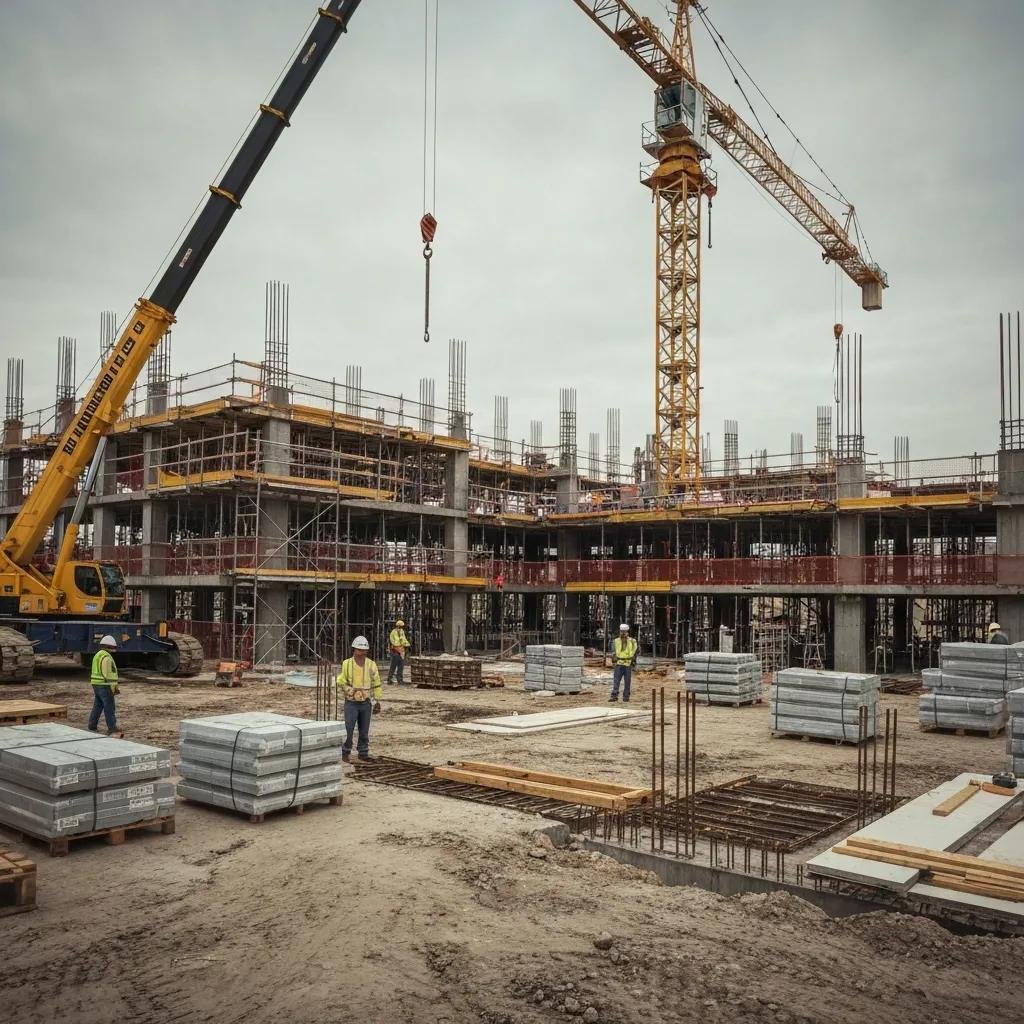
- Construction execution: Sequential and overlapping activities—site work, structure, MEP, finishes—move the project toward occupancy under active QA and inspections.
- Post-construction closeout: Commissioning, punch lists, and turnover finalize the project and prepare the facility for tenant fit-out or occupancy.
Intro to the EAV table: the table below compares each phase with typical activities and duration ranges so project stakeholders can benchmark timelines during early planning.
| Phase | Typical Activities | Typical Duration / Key Deliverables |
|---|---|---|
| Pre-construction planning | Feasibility, budgeting, site assessments, long-lead identification | 4–12 weeks / feasibility report, baseline schedule |
| Design development | Schematics to construction documents, coordination | 12–28 weeks / permit-ready drawings, specs |
| Procurement & permitting | Bidding, ordering long-lead equipment, permit applications | 8–20 weeks / executed purchase orders, permits |
| Construction execution | Site mobilization, structure, MEP, finishes, inspections | 20–52+ weeks / built structure, passed inspections |
| Post-construction closeout | Commissioning, punch list, final cleaning, handover | 2–8 weeks / certificates of occupancy, turnover docs |
This comparison clarifies where time is typically consumed and which deliverables mark phase completion. The next section drills into what happens during pre-construction and planning so teams can prevent early schedule erosion.
What Happens During the Pre-Construction and Planning Phase?
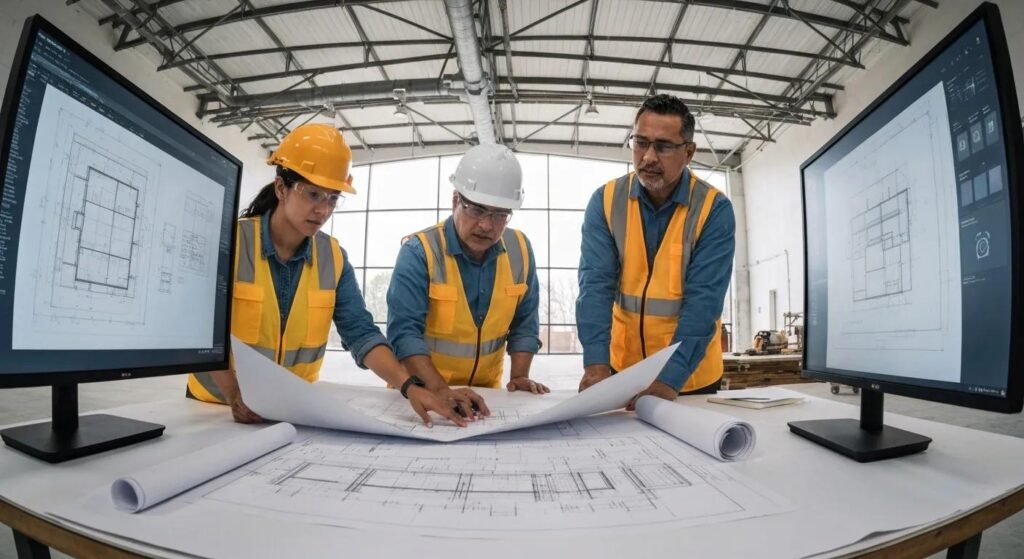
Pre-construction is the foundational phase where scope, budget, and risks are defined and schedule contours are set, and this planning is the primary determinant of downstream timeline reliability. During this period teams perform feasibility studies, site assessments, stakeholder alignment meetings, and early identification of long-lead items such as specialized MEP equipment or custom façade components. Establishing a realistic baseline schedule and contingency reserves at this point reduces the probability of scope creep and provides measurable triggers for escalation later. A concise checklist—confirm scope, identify long-leads, develop preliminary CPM logic, and assign owner decision windows—keeps planning actionable and creates the early critical path that informs procurement and permitting steps.
Early planning directly affects design choices and procurement sequencing; understanding these ties prepares teams to manage design iterations and avoid late changes that push the critical path into construction.
How Does the Design and Development Phase Shape Project Timelines?
The design and development phase turns conceptual scope into construction-ready documents, and the completeness and coordination of these documents determine procurement timing and onsite sequencing. Iterative design changes, inconsistent coordination between architects and engineers, or delayed approvals lengthen the period to issue bid packages and can shift critical-path activities such as procurement of long-lead MEP equipment. Using strategies like phased approvals, design freezes for critical systems, or design-build delivery can compress this phase while preserving quality by reducing the number and scale of late changes. Clear milestones for 30/60/90% design reviews and an owner sign-off cadence help lock in procurement windows and protect the schedule.
A design strategy that emphasizes early coordination and staged approvals reduces ambiguity and prevents rework during procurement and permitting that otherwise cascades into on-site delays.
What Is Involved in Procurement and Permitting for Commercial Projects?
Procurement and permitting encompass selecting subcontractors, ordering materials, and securing regulatory approvals—the combination of which often introduces the greatest variability in commercial construction schedules. Typical permits (zoning reviews, building permits, MEP permits) have review cycles that vary by jurisdiction, and long-lead items such as rooftop units or specialty glazing can require months of lead time from manufacture to delivery. Early ordering of critical equipment, permit expediting strategies, and maintaining alternate suppliers are standard mitigations. A pragmatic approach bundles permit submittals with procurements to reduce idle time between approval and installation.
Intro to permits table: the table below summarizes common permit types, typical approval windows, and practical mitigation steps for avoiding procurement-driven schedule slippage.
| Permit / Procurement Item | Typical Impact on Schedule | Mitigation Strategy |
|---|---|---|
| Building permit | Delays occupancy if not approved before construction milestones | Early submission, pre-application meetings with authority |
| MEP permits | Can block system installations and inspections | Coordinate MEP designs early, fast-track critical submittals |
| Long-lead equipment (HVAC, elevators) | Delivery delays stall installation sequencing | Order on approved-for-procurement drawings, identify alternates |
| Specialty materials (façade, glazing) | Custom fabrication extends lead time | Lock shop drawings early, secure supplier commitments |
Pre-approving long-lead purchases and actively tracking permit review calendars reduces uncertainty and protects the project’s critical path.
How Is the Construction Execution and Project Closeout Managed?
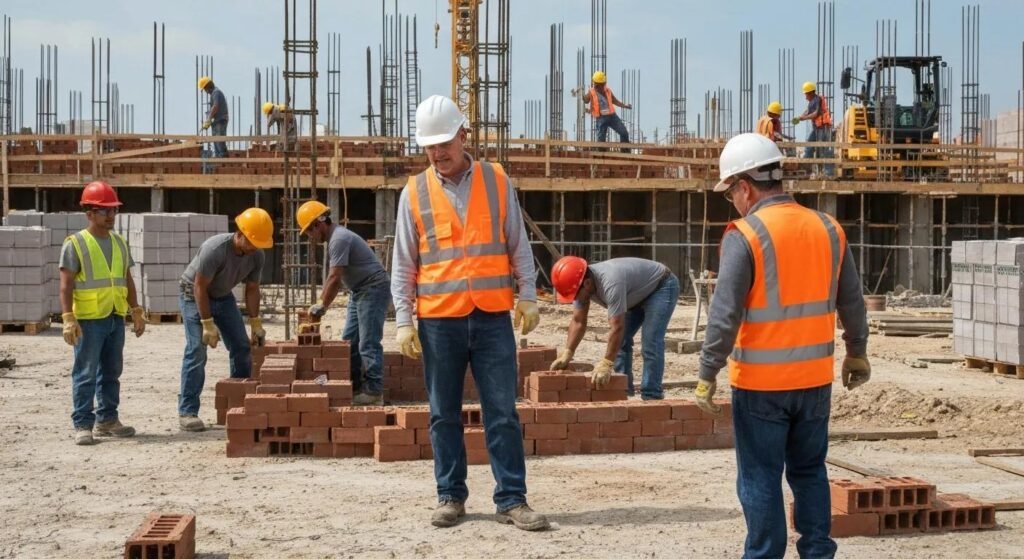
Construction execution translates designs and procurements into built systems, and disciplined sequencing, quality assurance, and milestone monitoring are essential to keep the commercial construction schedule on track. Execution includes site mobilization, temporary facilities, structural work, envelope installation, and MEP rough-in through finishes, and each stage relies on preceding inspections and approvals. Effective management uses CPM schedules, milestone-based procurements, progressive quality checks, and defined handover criteria to align subcontractor work and inspections. Closeout is a structured sequence—punch-list completion, commissioning, documentation handoff, final cleaning, and turnover—that must be scheduled weeks in advance to avoid last-minute delays that affect occupancy and commissioning sign-offs.
Below is a practical closeout task table showing ownership and timing so teams can schedule cleaning trades and commissioning activities as explicit milestones rather than afterthoughts.
| Closeout Task | Responsible Party | Timing in Project Timeline |
|---|---|---|
| Punch list creation and completion | General contractor with subcontractors | Begins at substantial completion; complete within 2–4 weeks |
| HVAC commissioning and controls verification | Commissioning agent / mechanical contractor | Scheduled during finishes, before final inspections |
| Final cleaning and air duct/HVAC cleaning | Cleaning trades / specialty vendors | Immediately after dust-generating finishes, prior to turnover |
| Documentation handover and warranties | Contractor to owner | At final closeout meeting / turnover package delivery |
Scheduling final cleaning, including targeted air duct cleaning and commercial cleaning services, as a line item in this table reduces rework and supports immediate facility readiness. Coordinating cleaning vendors into the closeout checklist prevents occupancy delays and improves indoor air quality prior to handover.
What Are the Key Activities in the Construction Execution Phase?
Construction execution requires disciplined sequencing of mobilization, structural work, envelope closure, MEP installation, and interior finishes, with each activity tied to inspection and quality-control milestones that protect the schedule. Site mobilization establishes safety and logistics, which supports parallel trade work where possible to compress duration without compromising quality. Progress monitoring uses percent complete metrics, milestone attainment, and earned value indicators to flag deviations early and enable targeted corrective actions. Regular coordination meetings and enforced lookahead schedules (30- to 90-day windows) align trades and material deliveries to prevent overlaps or gaps that create rework.
These execution controls naturally feed into a structured closeout plan that includes commissioning and final cleaning, which are critical to achieving occupancy-ready status.
How Does the Post-Construction and Closeout Phase Finalize the Project?
Closeout consolidates punch lists, commissioning results, final inspections, and turnover documentation, and it formalizes acceptance criteria for occupancy with a focus on systems performance and user readiness. Commissioning—particularly for HVAC and controls—verifies that systems operate according to design intent and is often a gating item for final approvals; scheduling HVAC/duct cleaning and indoor air quality checks before commissioning enhances performance and reduces commissioning delays. A comprehensive turnover package includes O&M manuals, warranty information, as-built drawings, and a documented punch list resolution timeline. Ensuring cleaning trades and air duct cleaning are contracted and scheduled as explicit closeout milestones reduces the risk of deferred rework and improves immediate occupant comfort.
Final handover should be planned as a staged activity with technical and custodial tasks assigned explicitly to responsible parties to avoid last-minute occupancy impediments.
What Are the Most Common Delays in Commercial Construction Projects?
Delays in commercial construction are most often traceable to planning and design deficiencies, external conditions like weather and supply chain disruptions, and breakdowns in communication and change-order management. Each category has characteristic impacts: planning flaws create scope gaps and rework, external events introduce unpredictable waiting periods, and communication failures produce misaligned sequencing that stalls progress. Quantifying these risks and pairing each with practical mitigation reduces their frequency and severity. The EAV table below lists common delay types with typical impacts and mitigation measures so owners can prioritize risk responses.
Intro to delay table: this table lists prevalent delay causes, typical schedule impacts, and proven mitigations to support decision-making during pre-construction and execution phases.
| Delay Cause | Typical Impact on Schedule | Mitigation Strategy / Example |
|---|---|---|
| Incomplete planning & late design changes | Multi-week to multi-month rework | Implement design freeze points and contingency reserves |
| Permitting delays | Holds on critical early trades | Early engagement with authorities, permit expediting |
| Supply chain / material shortages | Delivery-driven activity stalls | Identify alternates, pre-order long-lead items |
| Weather and force majeure | Unplanned downtime and schedule padding | Seasonal planning, protective sequencing, buffer days |
Identifying which cause is most likely for a given project helps teams apply targeted mitigations rather than generic schedule padding.
How Do Planning and Design Flaws Cause Project Delays?
Planning and design flaws—such as incomplete scope definitions, uncoordinated disciplines, or late owner-directed changes—generate rework that often pushes critical-path activities into later stages. In practice, inadequate risk identification during pre-construction corresponds to a significant share of schedule slippage, so a structured risk register and staged approvals help capture and mitigate those issues early. Mitigations include a formal design freeze for long-lead procurement, reserved contingency funding, and explicit decision windows for owners that prevent iterative scope creep. Clear documentation and change-order discipline limit the downstream impact of necessary design evolution.
Addressing these planning flaws in pre-construction reduces the likelihood that design issues become execution problems, enabling smoother procurement and on-site sequencing.
What External Factors Impact Commercial Construction Timelines?
External factors—weather events, regulatory changes, supply chain disruptions, and local labor availability—introduce variability that teams must plan for with seasonally adjusted schedules and alternative sourcing strategies. Severe weather and regional storms can halt outdoor works, humidity can slow finishes and commissioning, and material scarcity can defer installations until replacements are available. Mitigations include contingency days in the master schedule, dual-sourcing critical materials, and forward-buying key components where financially prudent. In regions with volatile supply chains, maintaining vendor relationships and visibility into supplier lead times is a strategic advantage.
Understanding external factor frequency and impact allows teams to calibrate reasonable schedule buffers without overinflating duration estimates.
How Do Communication and Management Issues Affect Project Schedules?
Poor communication, unclear responsibilities, and ineffective change-order workflows create coordination breakdowns that manifest as misaligned deliveries, idle trades, and repeated rework—each eroding schedule performance. Governance structures such as RACI matrices, regular stand-up and steering meetings, and centralized document management reduce miscommunication and accelerate decision-making. Technology—shared schedules, issue trackers, and mobile reporting—supports real-time visibility and faster resolution of blockers. Instituting a clear change-order protocol with cost and time assessment windows prevents trivial requests from derailing critical-path activities.
Consistent communication rhythms and defined escalation paths keep decision latency low and maintain momentum across interdependent workstreams.
How Can Commercial Construction Project Timelines Be Optimized?
Optimizing timelines combines proactive planning, disciplined risk management, collaborative governance, and appropriate technology adoption to compress or protect the schedule without sacrificing quality. Early identification of long-lead items and a living risk register enable targeted procurement strategies that avoid last-minute orders and delayed installations. Collaborative contracting models and integrated teams reduce friction between design and construction, while tools like CPM scheduling and BIM coordination actively eliminate clashes and sequencing inefficiencies. The numbered list below summarizes high-impact actions teams can apply to improve schedule reliability.
- Prioritize early identification and ordering of long-lead items to remove procurement as a critical-path blocker.
- Use staged design approvals and design-for-construction coordination to minimize later design revisions.
- Implement a living risk register with assigned owners and regular reviews to track triggers and contingencies.
These steps, combined with governance and technology, form the backbone of schedule optimization.
What Are Effective Strategies for Proactive Planning and Risk Management?
Proactive planning begins with a risk register that records potential threats, assigned owners, probability/impact ratings, and trigger-based contingencies; it’s an actionable map rather than a static list. Identifying long-lead items early and allocating contingency budgets and schedule buffers for those items protects the critical path and simplifies decision-making when disruptions occur. Regular risk-review cadences—aligned with design and procurement milestones—allow emerging threats to be mitigated before they compound. A recommended practice is to quantify contingency percentages against line items that historically show variance and to reassign unused contingency to accelerate favorable opportunities.
Active risk management shortens reaction times and preserves schedule agility by turning uncertainties into monitored items with pre-agreed responses.
How Does Clear Communication and Collaboration Improve Project Efficiency?
Clear communication enforces accountability and accelerates decisions through structured meeting cadences, defined roles, and centralized documentation that everyone accesses in real time. A sample meeting rhythm includes weekly site coordination, biweekly design reviews, and monthly steering meetings with owners to resolve scope or budget items; coupled with a RACI matrix, this cadence reduces ambiguity about who must act and when. Centralized communication platforms replace siloed emails and ensure schedule impacts of decisions are immediately visible to planners and contractors. These governance practices reduce delays caused by waiting for approvals or clarifications and improve trade sequencing.
Consistent collaboration protocols reduce friction, enabling teams to re-sequence work where beneficial and avoid reactive schedule compression that risks quality.
What Role Does Technology Play in Managing Construction Timelines?
Technology accelerates timeline reliability by improving coordination, automating reporting, and surfacing schedule risk through data-driven insights such as CPM critical-path visualization and BIM clash detection. BIM supports coordination between disciplines, reducing field clashes that create rework, while integrated PM platforms automate progress capture, change-order tracking, and dashboard reporting for stakeholders. Mobile reporting tools provide real-time percent-complete data to keep earned-value metrics accurate and timely. Selecting technology aligned with firm scale—lightweight mobile tools for small teams, enterprise CPM and BIM workflows for larger programs—delivers the most practical schedule benefits.
Using technology strategically compresses timelines by reducing rework, improving forecasting, and enabling proactive adjustments informed by near-real-time data.
How Do Local Houston Factors Influence Commercial Construction Timelines?
Houston’s permitting environment, seasonal storms, and regional labor market conditions create project-specific timeline sensitivities that owners and project teams must explicitly address during planning. Local permit review cycles and common bottlenecks influence baseline schedule assumptions, while humidity and storm seasons increase the probability of weather-related work stoppages and commissioning challenges. Houston’s contractor and subcontractor availability also shapes realistic productivity rates and crew-level scheduling. Applying localized mitigation strategies—permit pre-application meetings, seasonal sequencing of exterior work, and flexible subcontractor mobilization—improves predictability for Houston commercial construction timelines.
These local factors imply that schedule models used elsewhere should be adjusted for Houston’s higher weather variability and permitting nuances to avoid unrealistic timing expectations.
What Are Houston’s Permitting and Approval Processes for Commercial Projects?
Houston’s permitting process for commercial projects often includes multiple city reviews—zoning, commercial building, and MEP reviews—and timelines vary with project complexity and pre-application preparedness. Typical bottlenecks include incomplete submittals and backlog during peak periods, and early engagement with permitting authorities and use of expediting services can materially shorten review cycles. Practical steps include pre-application conferences, submission of coordinated, permit-ready drawings, and tracking permit review calendars to align procurement and mobilization. Owners that prioritize early submittals and maintain an active permit liaison reduce unpredictable hold-ups that otherwise shift on-site sequencing.
Proactive permit management converts an otherwise reactive risk into a scheduled activity that teams can track and manage.
How Do Regional Weather and Labor Market Conditions Affect Project Schedules?
Houston’s humid subtropical climate and storm season elevate the risk for rain and humidity-related delays during exterior and finish work, while regional labor market dynamics influence crew availability and productivity, especially for specialized trades. Mitigations include scheduling exterior shell work in drier seasons where possible, planning overtime or temporary labor windows for critical finish milestones, and securing subcontractor commitments earlier in the procurement phase. For MEP commissioning and HVAC turnover, humidity impacts may require adjusted balancing procedures and additional commissioning time; integrating those allowances into schedules prevents last-minute extensions.
Accounting for seasonal weather risks and local labor dynamics when setting baseline durations produces more achievable timelines and fewer compressed re-sequencing decisions mid-project.
What Are Best Practices for Managing Commercial Construction Project Schedules?
Best practices for schedule management combine disciplined monitoring, flexible corrective actions, and continuous improvement to keep commercial construction projects on track and responsive to change. Monitoring uses CPM critical-path analysis, earned-value metrics, and percent-complete reporting to surface slippage early, while adjustment strategies—such as re-sequencing, adding shifts, or prioritizing scope—are chosen based on cost-benefit tradeoffs. Continuous improvement occurs when teams capture lessons learned about recurring delay causes and refine procurement lead-time estimates, meeting cadences, and contingency policies. The short checklist below highlights persistent control activities project managers should adopt to maintain schedule health.
Schedule-health checklist:
- Maintain an up-to-date CPM schedule with assigned float and critical-path visibility.
- Run weekly lookaheads and daily coordination for short-term sequencing.
- Use objective percent-complete metrics and earned-value calculations for realistic progress measurement.
These controls, backed by governance and toolsets, enable timely corrective actions and foster a culture of predictable delivery.
How Can Project Managers Monitor and Adjust Timelines Effectively?
Project managers should monitor schedule health using a combination of CPM critical-path tracking, earned value analysis, and consistent percent-complete reporting that ties field progress to schedule logic. A recommended monitoring cadence includes weekly schedule reviews, monthly earned-value reporting, and immediate escalation when critical-path tasks fall behind their lookahead targets. Corrective actions should be predefined in a decision tree: first re-sequence non-critical work, then consider adding shifts or increasing crew size, and finally evaluate scope deferral or fast-tracking options if needed. Documenting the cost/time tradeoffs of each corrective path expedites decisions and aligns stakeholders around the chosen recovery plan.
Predictable monitoring rhythms and predefined corrective paths reduce decision lag and enable timely, cost-aware schedule recovery.
What Tools and Techniques Support Efficient Commercial Construction Scheduling?
Effective scheduling uses CPM software for critical-path visibility, BIM for clash detection and coordination, and mobile progress-capture tools to feed accurate field data into dashboards and reports. CPM tools show float and sequencing impacts, BIM highlights coordination issues before they reach the field, and mobile reporting ensures that percent-complete and quality data are current. Integrating these tool categories into a single workflow reduces manual reconciliation and supports automated notifications when tasks slip. For most teams, adopting a combination of scheduling, BIM coordination, and mobile progress platforms tailored to organizational scale yields the best balance of cost and scheduling benefit.
Choosing interoperable tools that support structured data exchange and align with your governance model maximizes schedule transparency and reduces rework.
For Houston-area businesses ready to move from planning to occupancy, RJT Construction LLC is a local family-owned and operated commercial and residential construction company that emphasizes quality work at competitive prices, in-house labor, and a five-year guarantee on projects. To support facility readiness and indoor air quality during closeout, plan and schedule final cleaning tasks explicitly—this includes final commercial cleaning and targeted air duct cleaning as part of HVAC commissioning and turnover. Educate, inform, and generate local leads for air duct cleaning services and commercial cleaning services.