
Understanding Warranties and Guarantees: Essential Insights for Hiring Commercial Contractors
A warranty is a contractual promise that specified work or materials meet agreed standards, while a guarantee is often a broader performance pledge; together they protect commercial owners from unexpected repair costs and performance failures. This article explains how warranties and guarantees operate in commercial construction, why they matter for facility managers and property owners, and how to evaluate and document protections before and after contracting. You will learn the main warranty types—workmanship, material, and structural—the typical durations to expect, and how Texas timing rules can affect claims. Practical contract clauses and sample wording are provided so you can negotiate enforceable protections without legalese. The guide also explains how service-level guarantees apply to post-construction work such as air duct cleaning and commercial cleaning, and it introduces RJT Construction’s five-year guarantee as a local assurance option in Houston. Understanding these elements helps you reduce risk, allocate liability, and maintain indoor air quality and facility uptime over the lifecycle of your asset.
What Is a Commercial Construction Warranty and Why Is It Important?
A commercial construction warranty is a contractual assurance that certain defects in workmanship or materials will be remedied within a defined period, and it operates to allocate risk between owner and contractor. Warranties work by defining scope (what is covered), duration (how long coverage lasts), exclusions (what is not covered), and remedies (repair, replacement, or credit), which together reduce uncertainty and transfer specific financial exposure. For owners, warranties preserve capital by ensuring defects discovered post-completion are the contractor’s responsibility rather than requiring out-of-pocket emergency repairs. Facility managers rely on warranties to schedule maintenance, to plan for lifecycle replacements, and to enforce quality standards with subcontractors and manufacturers, creating a predictable pathway for addressing defects.
How Do Warranties Protect Commercial Construction Projects?
Warranties protect projects by setting remedial obligations and timelines that compel contractors or manufacturers to correct defects, thereby preserving building function and value. When a defect arises—such as a leaking roof seam or improperly installed HVAC component—the warranty defines who inspects, who pays for temporary mitigation, and who ultimately repairs or replaces the failing element. The typical claim workflow includes documenting the defect, providing formal notice, allowing a cure period, and then escalating to remediation steps if unresolved; this process limits surprise costs and preserves contractual remedies. Effective warranty language also enables owners to recover consequential losses in limited circumstances or secure performance bonds and holdbacks until obligations are met, which strengthens enforcement. Understanding these mechanisms helps owners activate warranties efficiently and avoid delays that can worsen damage.
What Are the Key Elements of a Construction Warranty?
A robust construction warranty contains five core elements that owners should confirm before contract execution: scope, duration, exclusions, notice requirements, and remedies. Scope specifies covered systems or components and clarifies whether subcontractor or manufacturer warranties are included, which prevents disputes about responsibility. Duration sets the time window for claims and often varies by trade—shorter for finishes, longer for structural elements—so owners must match lifecycle expectations to warranty length. Exclusions list wear-and-tear, misuse, and acts of God, helping both parties understand limits; notice requirements and remedies define how to report defects and whether repair is prioritized over replacement. Clear, plain-language clauses that allocate these attributes reduce ambiguity and streamline claim resolution.
What Is the Difference Between a Construction Warranty and a Guarantee?
A construction warranty is a contractual promise with defined remedies, whereas a guarantee is often a marketing or performance promise that may not carry formal contractual enforcement; both aim to reassure owners but differ in legal weight. Warranties typically arise from contract terms or implied obligations and specify who fixes defects and how, while guarantees can be seller statements promising performance benchmarks or satisfaction but may lack specific remedial steps. For commercial clients, treating guarantees as supplementary assurances is prudent: confirm that any guarantee relevant to project scope is incorporated into the contract as an express warranty or addendum. Recognizing the distinction helps owners convert marketing promises into enforceable protections when negotiating contracts.
How Do Express and Implied Warranties Differ?
An express warranty is an explicit written or verbal promise about quality or performance, while an implied warranty arises by operation of law based on reasonable expectations of suitability and habitability. In construction, express warranties appear as contract clauses stating that workmanship will be free from defects for a set period; implied warranties might cover basic fitness for purpose even if not written. Owners can secure greater certainty by extracting express warranties in the contract and by requiring certificate documentation for manufacturer warranties, because expressed terms are easier to enforce than implied obligations. Ensuring that subcontractor and supplier warranties are assigned or passed through in the contract further clarifies responsibility.
When Should You Expect a Guarantee Instead of a Warranty?
Guarantees commonly appear in marketing, service-level promises, or voluntary performance commitments, and they are best treated as value-adds unless expressly incorporated into contractual terms. For example, a contractor might guarantee prompt response times or satisfaction with a cleaning service, which signals confidence but does not replace formal warranty protections for construction defects. Owners should insist that any guarantee critical to operations—such as air quality outcomes after duct cleaning—be documented as a contract provision with measurable KPIs and remedies. Framing guarantees as supplemental commitments that augment contractual warranties gives owners stronger, enforceable protection.
What Types of Commercial Contractor Warranties Should You Know?
Commercial projects typically involve multiple warranty types that address different risk layers: workmanship warranties from contractors, material or manufacturer warranties, and structural warranties for major load-bearing elements. Understanding each hyponym clarifies who to call when a problem appears—contractor for installation faults, manufacturer for material defects, and specialized warranty providers for long-term structural coverage. These categories intersect; for instance, a failing material might be covered by a manufacturer warranty but only if installation met specifications, so tracing responsibility matters. Reviewing these types before procurement ensures you collect required warranty certificates and align maintenance plans with coverage windows.
Intro to comparison table that contrasts the main warranty types and their key attributes.
| Warranty Type | Attribute | Typical Value |
|---|---|---|
| Workmanship warranty | Scope and responsibility | Contractor repairs installation defects |
| Material/manufacturer warranty | Coverage and transferability | Manufacturer replaces defective products |
| Structural warranty | Duration and risk | Covers major structural defects for longer terms |
What Is a Workmanship Warranty and What Does It Cover?
A workmanship warranty is the contractor’s promise that installed systems and finished work meet agreed standards and will be corrected if defective within the warranty period. Typical coverage includes installation errors, poor finishes, and nonconforming work that results from contractor labor rather than material failure, and owners should document initial inspections to establish baseline condition. Common exclusions include normal wear, damage from misuse, or post-completion modifications performed without contractor consent, so clear definitions of covered events are essential. Owners should retain punch-list records, photos, and as-built documentation to support future claims and to demonstrate that observed issues predate misuse or modification.
How Do Material and Structural Warranties Protect Your Investment?
Material warranties come from manufacturers and cover product defects such as premature corrosion or component failure, whereas structural warranties cover major load-bearing defects that threaten building integrity. Manufacturer warranties often include registration and transfer requirements, so owners must obtain warranty certificates and confirm transferability if ownership changes. Structural warranties tend to be longer and may involve third-party inspections or certifications prior to claim acceptance, creating an additional review layer that can protect long-term asset value. Coordinating claims requires distinguishing between installation faults (workmanship) and inherent product defects (material), which determines the responsible party and remedy.
How Long Do Commercial Construction Warranties Typically Last?
Warranty durations vary by type and are influenced by contract negotiation, industry norms, and manufacturer terms; owners should plan lifecycle maintenance around these ranges. Workmanship warranties for finishes often run one to two years, material warranties depend on product type and manufacturer policies, and structural warranties may extend five years or longer depending on provider terms. Negotiated extensions, maintenance requirements, and statutory deadlines can affect effective protection periods, so owners must align contract language with practical maintenance schedules. Understanding these ranges helps owners set inspection cycles and document defects within enforceable windows.
Intro to duration table showing typical ranges and influencing factors.
| Warranty Type | Typical Duration Range | Notes |
|---|---|---|
| Workmanship | 1–2 years | Varies by trade; routine inspections recommended |
| Material/Manufacturer | 1–10+ years | Depends on product type and manufacturer registration |
| Structural | 5–10 years or more | Longer-term protection for major defects |
What Are Standard Warranty Durations for Different Warranty Types?
Standard industry durations reflect expected useful life and typical risk exposure: short for cosmetic finishes, moderate for mechanical systems, and longer for structural items. For example, interior finishes and painting commonly carry one-year workmanship coverage, HVAC components often include manufacturer warranties of several years, and roof or foundational elements may have extended structural coverage. Negotiating longer periods for mission-critical systems is common in high-value commercial assets, but longer durations may require documented maintenance or scheduled service to remain valid. Owners should confirm maintenance obligations that could condition warranty validity and incorporate those duties into facility management plans.
How Does the Texas Statute of Limitations Affect Warranty Claims?
Texas law imposes statutory deadlines that can limit the time to bring claims for construction defects, and these statutory periods interact with contractual warranty windows to determine when legal remedies remain available. Statutes of limitation and repose can bar lawsuits after specified periods even if a warranty remains in place, so owners must understand both the warranty’s contractual timeline and applicable state deadlines to preserve rights. Practically, this means documenting defects and providing timely notice under contract terms as early steps, and consulting legal counsel when latent defects appear near statutory cutoffs. Proactive inspections and prompt claims filing help ensure that both contractual and statutory remedies remain available.
What Warranty Clauses Should Be Included in Your Commercial Construction Contract?
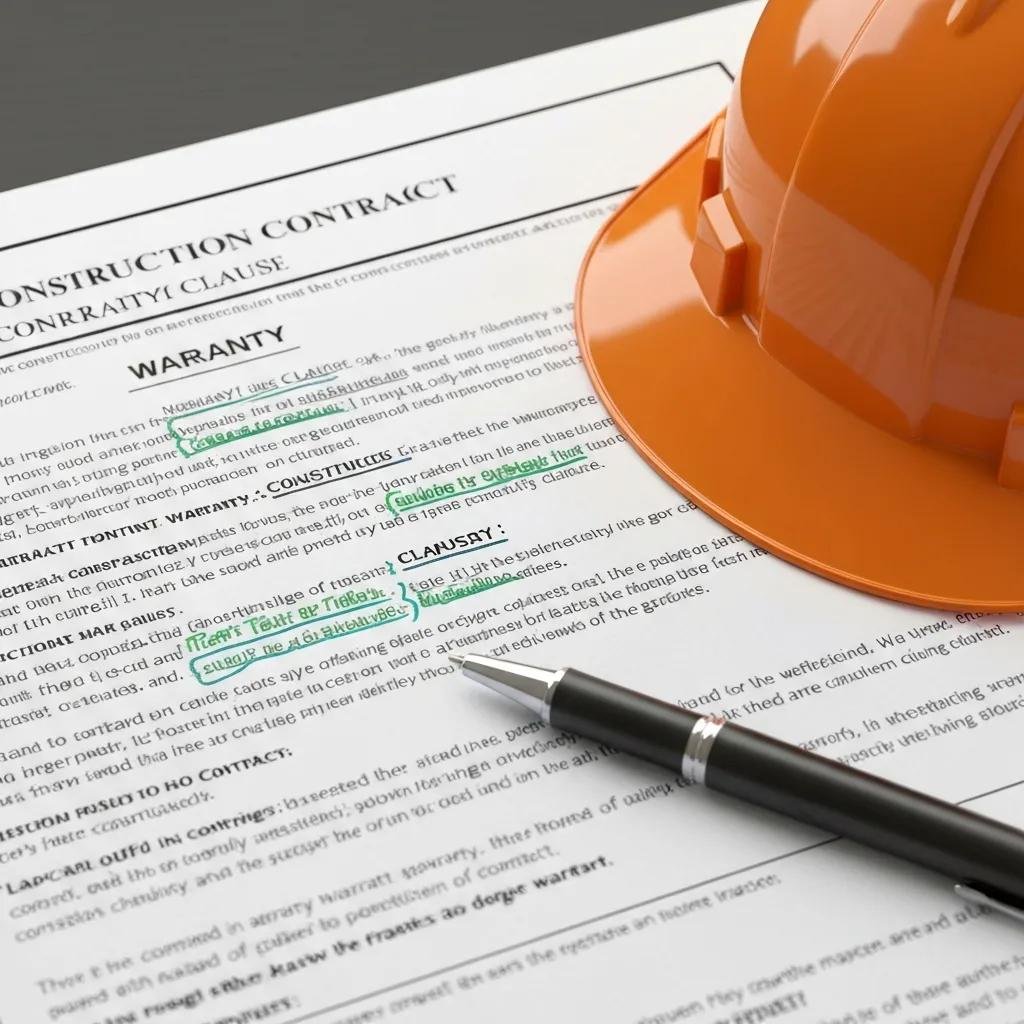
Certain contract clauses form the backbone of enforceable warranty protections: a clear scope clause, explicit duration clause, notice and cure procedure, remedies specification, and dispute resolution provisions. These clauses together define obligations, timelines, and processes that determine how defects are handled without immediate litigation. Including assignment provisions for manufacturer and subcontractor warranties ensures owners can pursue remedies across the project’s supply chain, and requiring warranty documentation at closeout simplifies post-completion claims. Clear clause language reduces ambiguity and aligns expectations for both parties, lowering the chance of protracted disputes.
Intro to table showing essential contract clause types and practical sample wording.
| Clause Name | Purpose | Sample Wording / Practical Tip |
|---|---|---|
| Scope clause | Defines covered work | “Contractor warrants all installed systems against installation defects for the period specified.” |
| Duration clause | Sets warranty length | “Workmanship warranty: 24 months from substantial completion unless otherwise noted.” |
| Notice/cure clause | Outlines claim process | “Owner must provide written notice and allow 30 days for contractor to inspect and cure reported defects.” |
| Remedies clause | Specifies remedial steps | “Contractor will repair defective work at no cost; replacement permitted if repair is inadequate.” |
Which Warranty Provisions Define Contractor Liability and Defect Resolution?
Liability and defect resolution arise from clauses that specify the contractor’s obligation to inspect, to repair, and to bear repair costs for covered defects, and they often include limits on consequential damages or caps on liability. A balanced approach defines primary remedies—repair first, then replacement or credit—while preserving remedies for repeated failures or major defects. Notice terms and cure periods structure the dispute process, giving contractors time to evaluate and address issues before escalation, and bonding or retainage mechanisms provide financial assurance of compliance. Carefully drafted liability clauses align incentives for prompt remediation while protecting owners’ operational needs.
How Can You Ensure Your Contract Covers All Necessary Warranty Protections?
Securing necessary protections requires a procurement checklist used during bidding and contract negotiation: request warranty certificates, require pass-through or assignment of manufacturer warranties, specify inspection and handover deliverables, and include post-completion maintenance obligations if needed. Documenting punch lists, commissioning reports, and baseline photographs at turnover strengthens future claims and creates objective evidence of initial condition. Owners should also require as-built drawings and operations manuals as contract deliverables to verify compliance with specified materials and systems. Applying this checklist during procurement reduces ambiguity and improves the likelihood of successful warranty enforcement.
- Request warranty documentation during bid evaluation and attach certificates to the contract.
- Require assignment or pass-through of subcontractor and manufacturer warranties to the owner.
- Include inspection, commissioning, and punch-list sign-off as conditions for substantial completion.
How Does RJT Construction’s Five-Year Guarantee Provide Added Assurance?
RJT Construction, a family-owned commercial and residential construction company based in Houston, offers a five-year guarantee on all its services, which complements standard warranty layers and can provide owners with extended reassurance for contractor-provided work. Because RJT uses in-house labor and is fully insured, the five-year guarantee functions as a contractor-level assurance that workmanship-related issues reported within the guarantee window will be addressed directly by their team. For owners, a contractor guarantee of this length can simplify claims involving installation defects by providing a single accountable party rather than requiring warranty coordination among multiple subcontractors or suppliers. Confirm in writing how the guarantee interacts with manufacturer warranties and any maintenance conditions that must be met for the guarantee to remain valid.
What Does RJT’s Five-Year Guarantee Cover and Exclude?
Available business information indicates RJT offers a five-year guarantee on its services, which suggests extended coverage for workmanship-related repairs and major service items, but owners should obtain explicit coverage details and exclusions before relying on the guarantee. Common practical exclusions to request clarification on include damage from misuse, alterations by third parties, normal wear and tear, and failures attributable solely to manufacturer defects; distinguishing these prevents misunderstandings at claim time. Owners should ask RJT for written statements that clarify response times, inspection procedures, and whether subcontractor or manufacturer issues are covered or require separate claims. Securing this specificity converts a marketing promise into an operational benefit.
How Can Clients Claim Warranty Support with RJT Construction?
When filing a claim under a contractor guarantee or warranty, follow a documented process: document the defect with photos and dates, notify the contractor in writing per contract notice requirements, allow the contractor to inspect and propose remediation, and schedule remediation or escalate per the contract if unresolved. For RJT, clients should prepare invoices, punch-list records, and maintenance logs that demonstrate normal operation to support a valid claim, and note that RJT’s in-house labor model generally reduces coordination time for repairs. Timely notification and clear documentation preserve both contractual and statutory remedies and enable faster resolution through the contractor’s insured resources.
What Warranties and Guarantees Apply to Commercial Air Duct Cleaning and Cleaning Services?
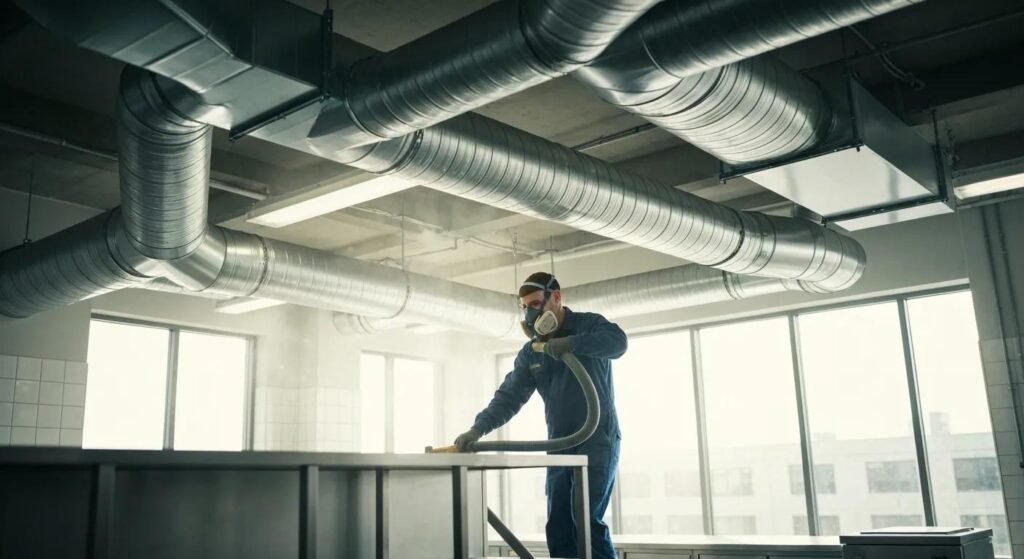
Service-level warranties for air duct cleaning and commercial cleaning typically focus on performance guarantees—such as re-clean policies, satisfaction guarantees, and adherence to cleanliness KPIs—rather than structural warranties, and they form an important part of facility maintenance strategy. For air duct cleaning, performance guarantees tie directly to indoor air quality benefits and may include rework commitments if visible debris or odor persists after service. Commercial cleaning guarantees can specify frequencies, service standards, and remediation steps for missed or unsatisfactory work; owners should request written service agreements that define measurable outcomes and response windows. Clarifying these guarantees in service contracts aligns expectations and provides contractual recourse for deficient performance.
Introductory list showing common service-level warranty features.
- Re-clean or rework policy: Service providers commit to returning to correct unsatisfactory cleaning outcomes.
- Satisfaction guarantee: Providers promise a remedy or credit if cleaning standards are not met.
- Performance metrics: Agreements specify KPIs such as dust levels, odor control, or particulate reduction.
How Does RJT Guarantee Quality in Commercial Air Duct Cleaning Services?
RJT Construction’s local service offerings and five-year guarantee suggest a focus on accountable in-house delivery, which can translate into consistent cleaning performance and responsive remediation when service-level issues arise. While specific air duct cleaning guarantee terms should be requested directly, owners can expect that a contractor using in-house labor and carrying insurance will be positioned to respond to re-clean requests and to coordinate repairs that impact ventilation systems. For lead-generation and service inquiries, owners seeking quotes for air duct cleaning or commercial cleaning can request documented service agreements that specify re-clean policies and measurable outcomes to ensure alignment with facility air quality goals.
What Performance Guarantees Support RJT’s Commercial Cleaning Services?
Performance guarantees for commercial cleaning generally include measurable standards—such as cleaning frequency adherence, surface cleanliness tolerances, and response times for remediation—which allow owners to verify compliance and request corrections if standards are unmet. Sample performance metrics include checklist completion rates, immediate re-clean commitments for missed tasks, and periodic verification inspections with documented results. Owners should request that RJT or any service provider incorporate such KPIs into a written service agreement and specify remedies such as rework at no charge or prorated credits when performance metrics fail. Including these terms in the contract turns service promises into enforceable obligations.
- Ask for specified KPIs and inspection intervals in the cleaning service agreement.
- Require a written re-clean policy that defines acceptable response time and scope.
- Document initial conditions and post-service verification to support any rework claim.
These actions ensure that cleaning and air quality services yield measurable results and that owners retain clear remedies if standards are not achieved. For Houston-area facilities seeking quotes for air duct cleaning or commercial cleaning, requesting a written service guarantee and documented KPIs is the first step toward protecting indoor air quality and operational continuity while leveraging RJT Construction’s local, insured capability.


